
We need one another.
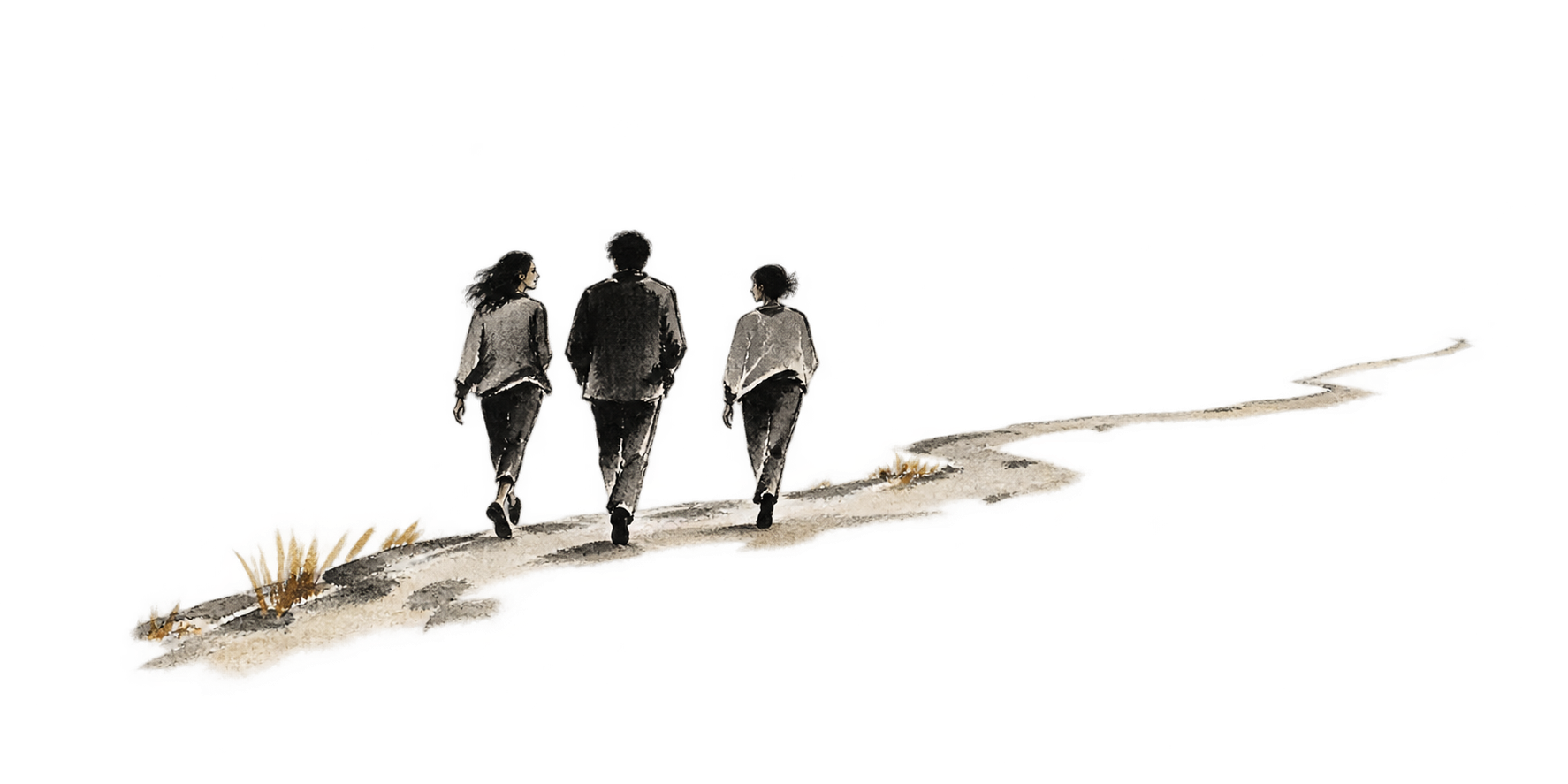
A little more time.
A little more room for one another.
We travel in small groups, with open questions and room for real encounters.
• • •
Why companions, now?
Because a life can be full and still feel lonely.
Connected. But to what?
We currently live immersed in a permanent flux of alerts and opinions that saturate our attention and slowly erode our capacity for reflection.
This exhaustion is structural. We are asked to be constantly available, to keep up, to perform, to carry pressures that were never meant to be carried by a single person.
Somewhere in all of this, we can lose the ordinary places where we meet without having to prove anything. A long meal or a walk with no particular destination. Someone who has time to listen.
Being together takes time.
We need each other. We need people who notice when we have gone quiet, who make room at the table, who remind us that we belong to something beyond our own private struggles.
Companions of the Wind makes a little space for that. We leave our usual rhythms for a while. We share meals, walks, questions, laughter and the occasional awkward silence. We let familiarity grow.
You can arrive alone. You can be talkative, shy, certain, confused. There is room for different ways of being here.
HOW IT BEGAN
A project born from encounters.
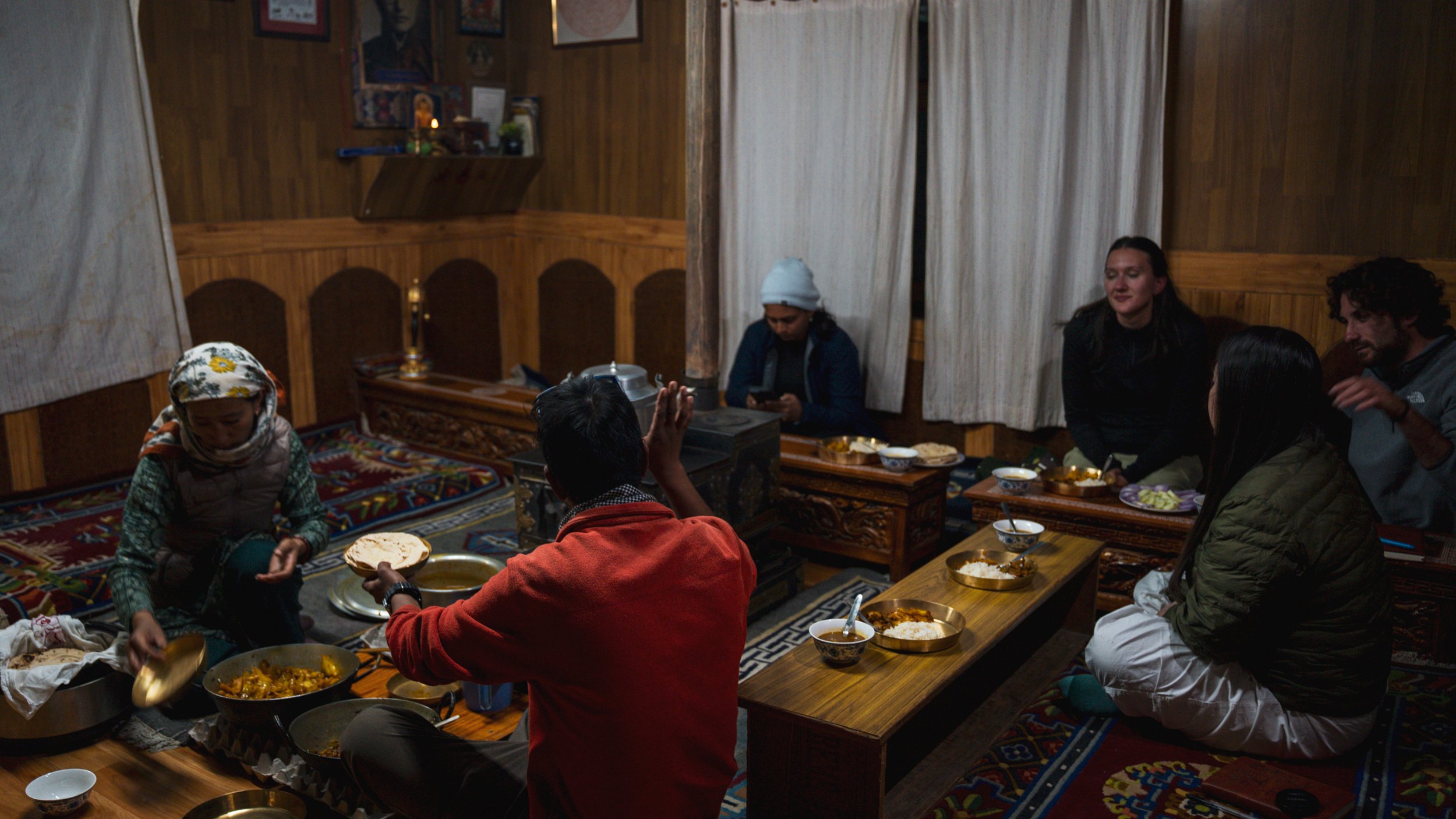
It began with Matthéo, a filmmaker looking for meaning through travel, stories and encounters. In Spiti, the simple rhythm of life with the families who welcomed him stayed with him long after he returned.
The project grew from a wish to share that space: time to walk, listen and meet people without turning every moment into something to achieve. Today it takes shape with the people, hosts and collaborators who make these journeys possible.
THE NAME WE TRAVEL WITH
Why the wind?
In Tibetan Buddhism, Tara is called Drolma, “she who liberates.” She is associated with the energy of wind and the swiftness of compassionate action. Mind and inner winds are closely connected in Tibetan practice: working with the breath is one way of learning to settle the mind.
For us, the wind also means letting go. Moving with what is there, accepting that we cannot hold everything still. It is an invitation to travel with attention, a little more freedom, and less certainty.
THE JOURNEY CONTINUES HERE
Elsewhere is a mirror.
What we discover there asks something of the way we live here.
We return to our work, our families, our familiar streets. The question is what we make room for there. More time around a table, fewer evenings lost to a screen, a little more care for the people beside us, a little more time with ourselves.
A slower way of living becomes real when it finds a place in everyday life. That is the part we continue exploring together.