
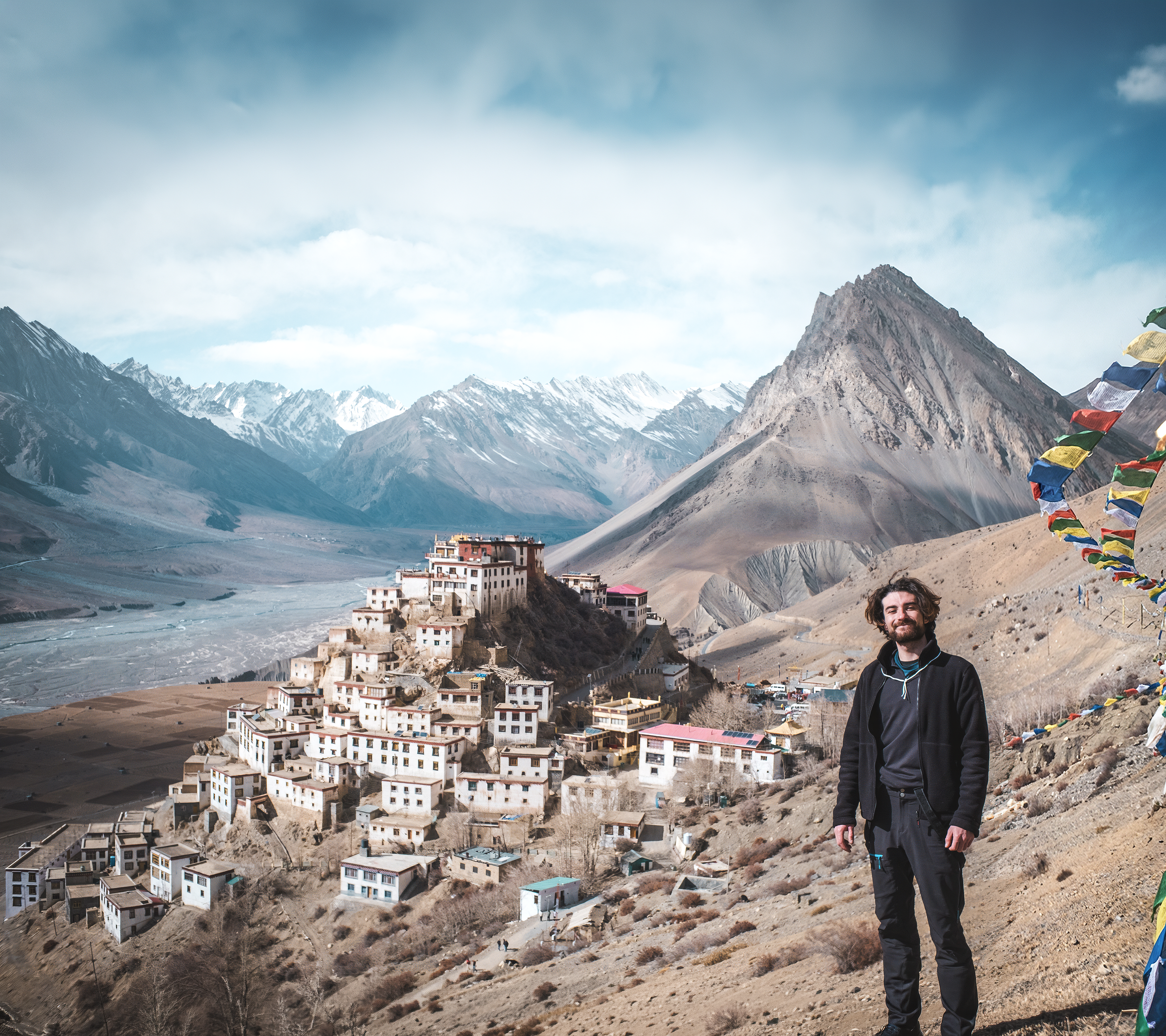
A Journey to “Little Tibet”
Fourteen days in Spiti Valley, one of the most remote valleys of the Indian Himalayas.
Seeing • Listening • Being
A GLIMPSE OF THE JOURNEY
There’s a flame within you, waiting to ignite.
Let the world move you.
Watch the film · 2 min
A glimpse into our 2026 journey through Spiti.
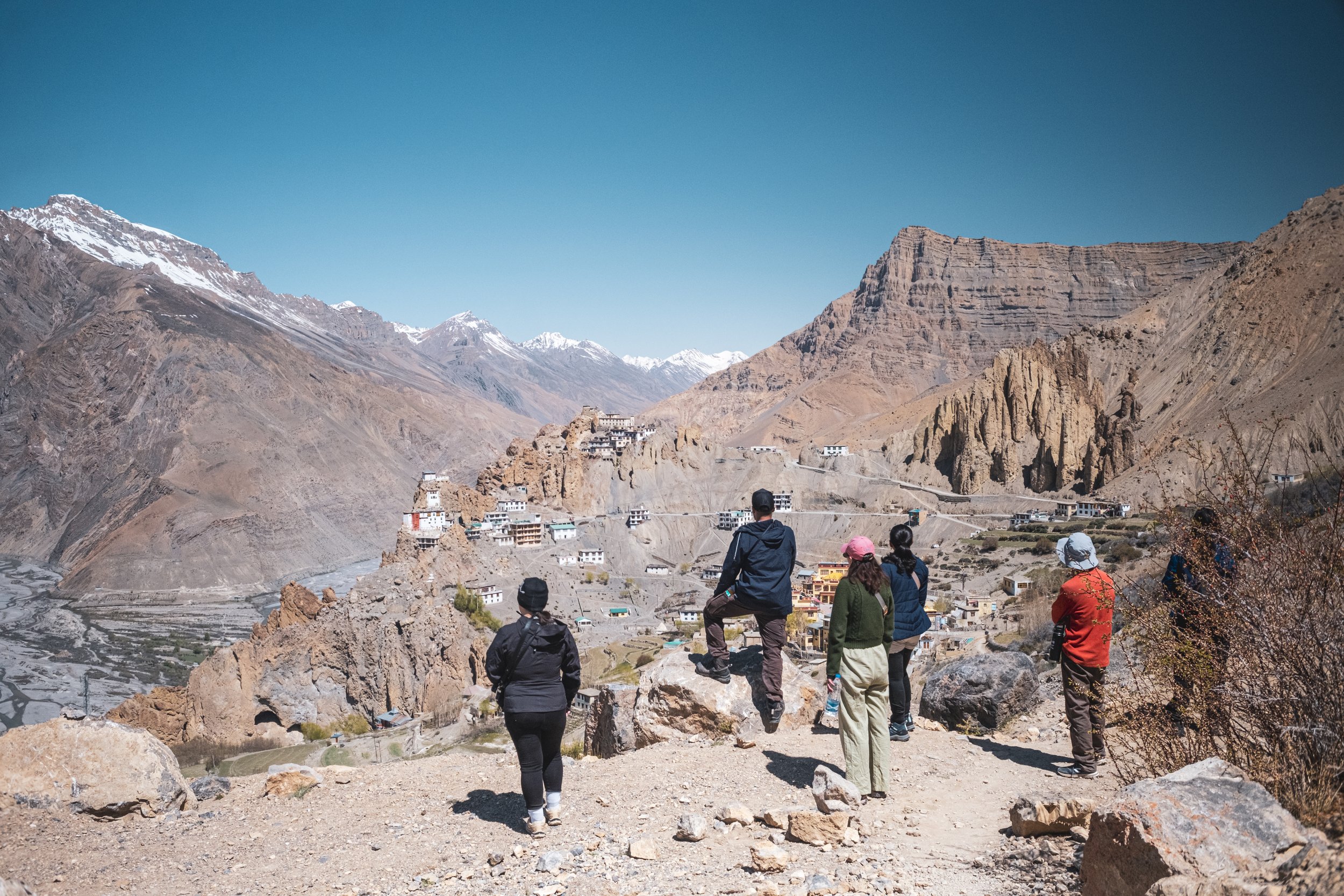
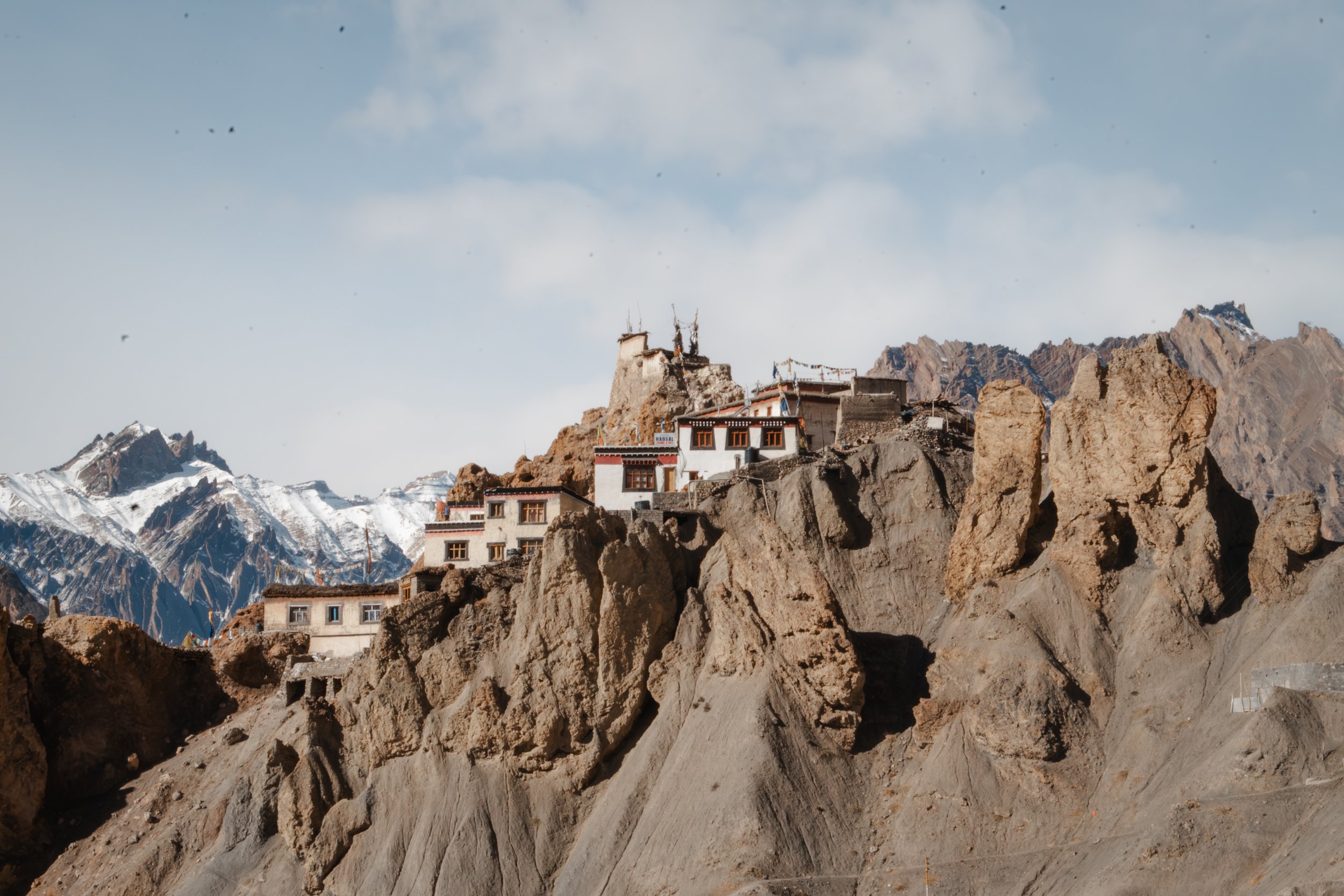
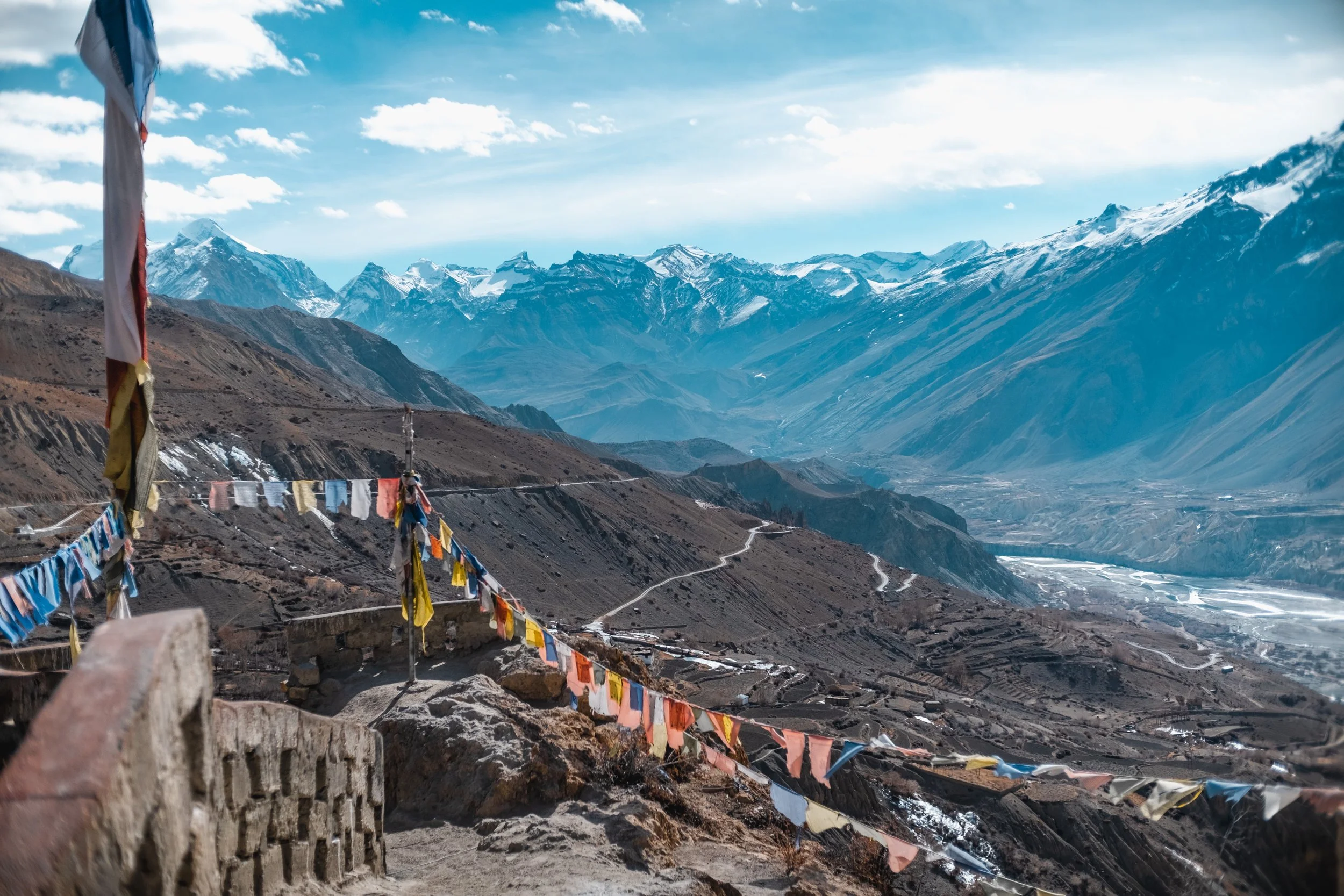
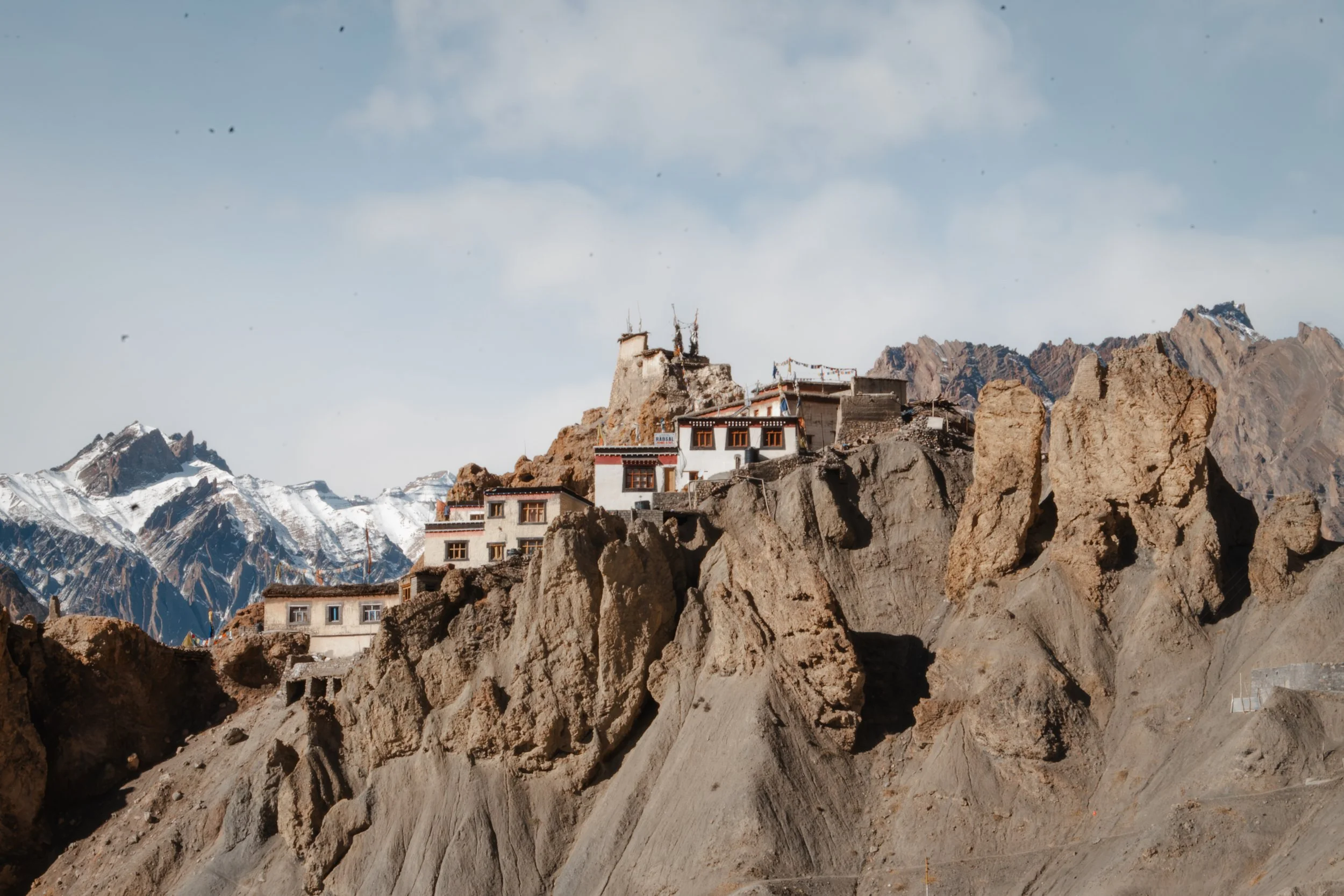
View over Dhankhar Monastery.
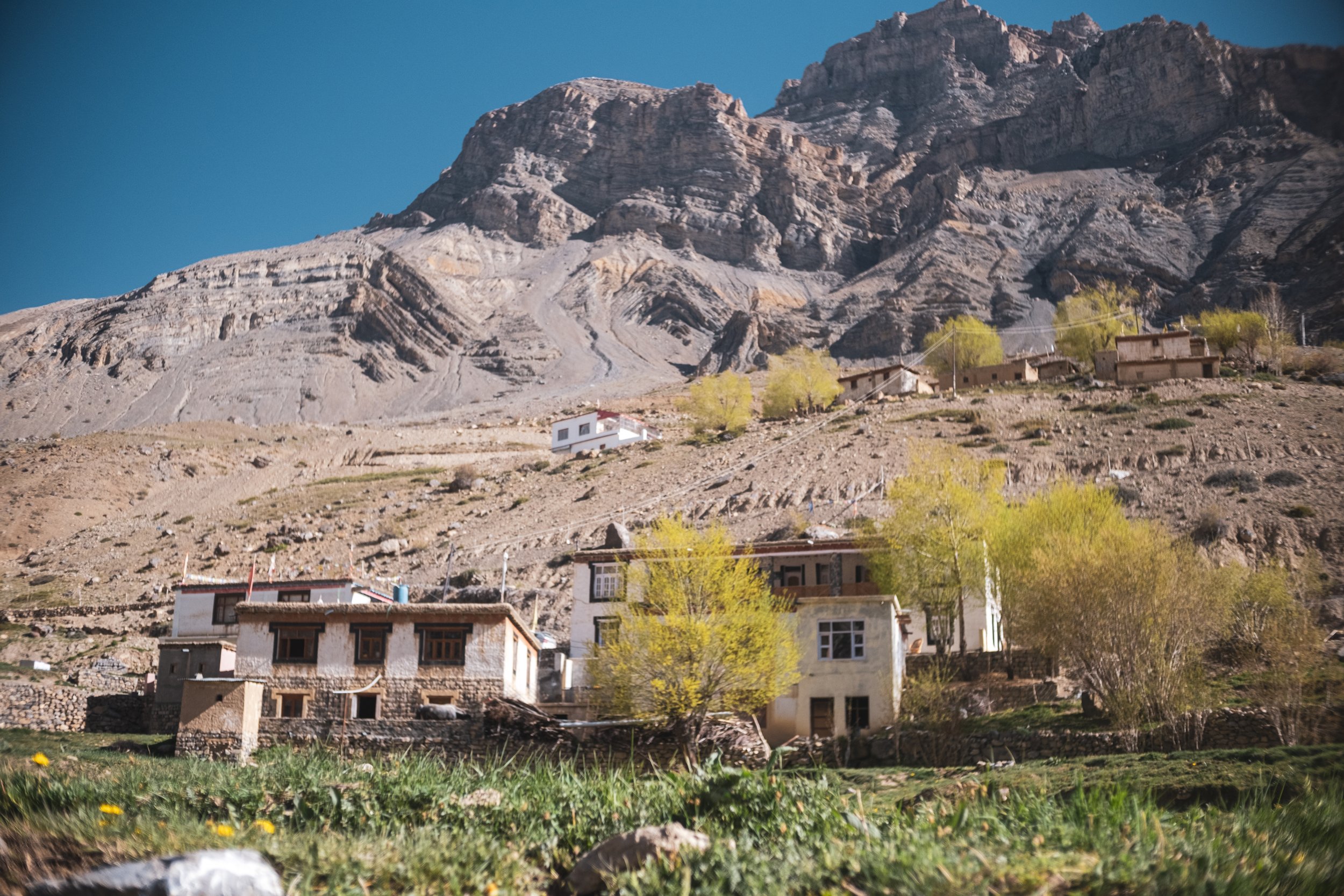
Hermitage : our home in Pin Valley.
A song to accompany your reading
A JOURNEY TO SPITI
One itinerary. One intention.
Up there, on the plateaus of Spiti, time expands and silence opens up unexplored space.
This fourteen-day journey is an opportunity to listen to your inner voice, reconnect with yourself, and discover a simple, demanding and deeply vibrant way of living in the world, inspired by the Tibetan culture of Spiti.

Key points
Duration: 14 days (excluding international flights).
Participants: small group, maximum 8 travellers.
Dates: 15–28 May & 5–18 June 2027.
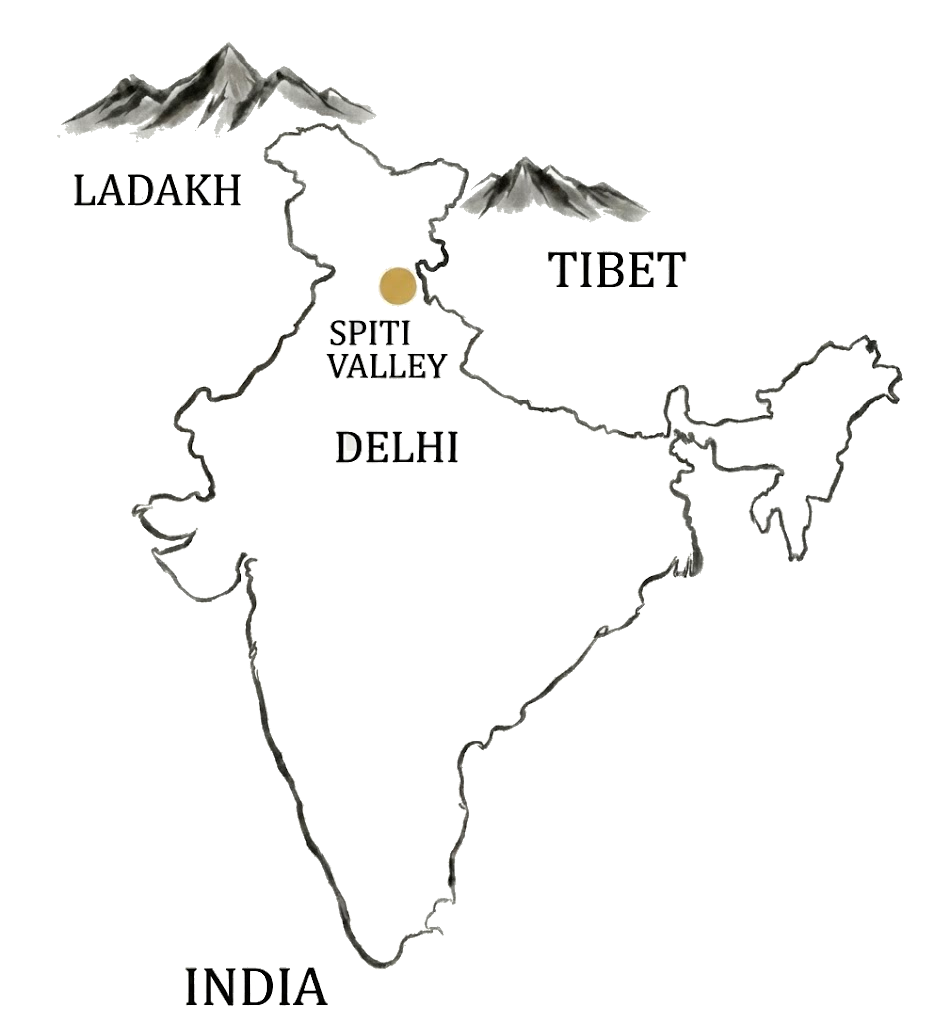
Region: Pin and Spiti Valley, Indian Himalayas.
Maximum altitude: approximately 4,400 m, with gradual acclimatisation.
Level: easy, slow walks; no sporting feats, but high altitude.
Accommodation: homestays, monasteries and simple guesthouses.
Supervision: local Ecosphere Spiti team & Matthéo Manticello of Companions of the Wind.
-
All local transport during the programme.
All accommodation with local residents, in monasteries or guesthouses.
All meals during the stay (breakfast, lunch, dinner)
All activities in which we will take part. (crazy ones!)
Support from the local Ecosphere Spiti and Les Compagnons du Vent team throughout the trip.
Talking sessions (on request), sharing circles, integration time.
Direct contribution to local communities and development projects.
Professional supervision provided by Ecosphere Spiti with safety kit and appropriate mountain protocol.
-
Transportation to Delhi (international/domestic f lights)
Personal insurance (travel & health - suggestions provided)
Personal expenses, tips and individual purchases.
Personal mountaineering equipment (recommended list provided before departure)
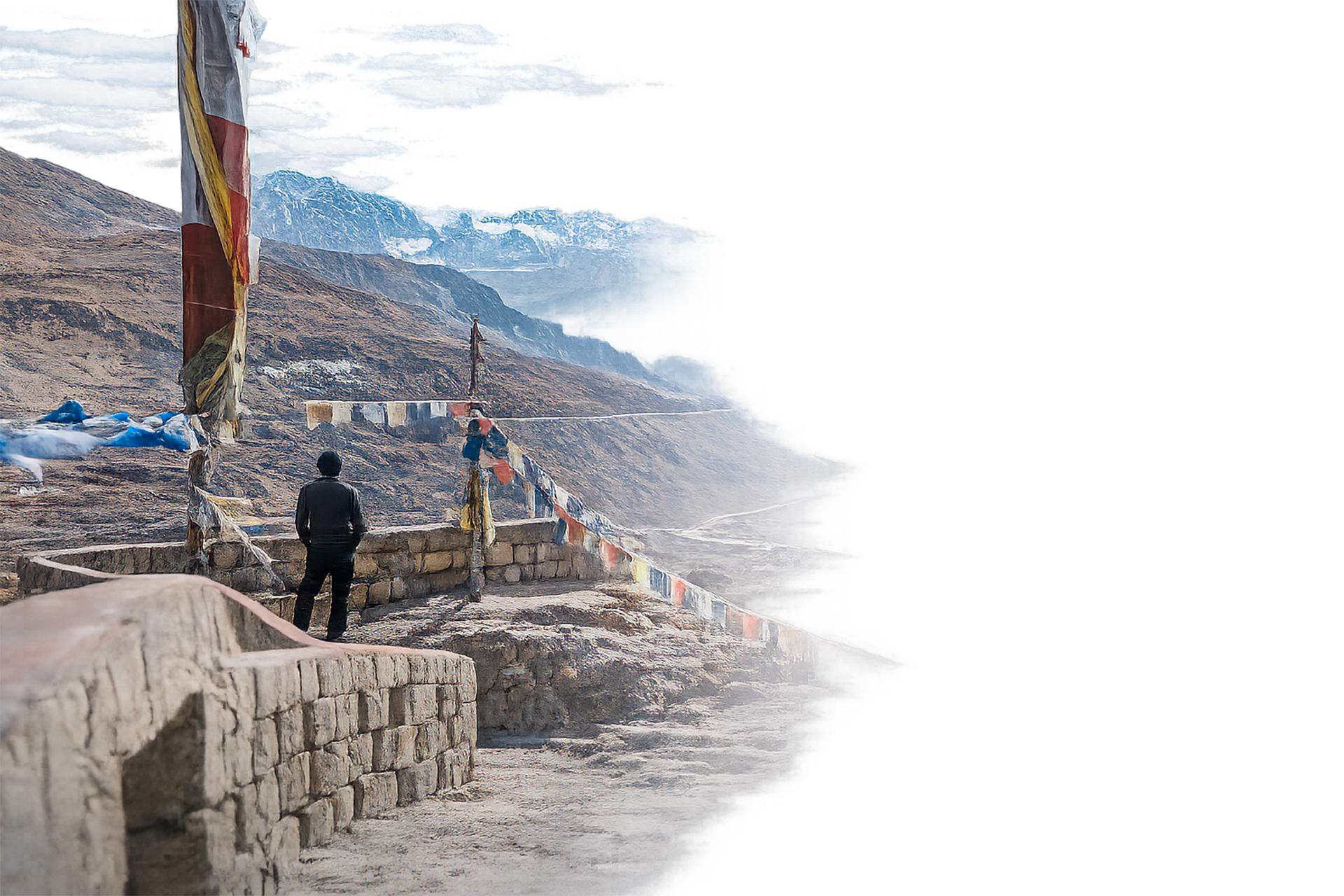
“Travel is a gateway through which we escape from familiar reality.”
• Alexandra David-Néel
The experience
I loved the Spiti Valley, sometimes called the middle land.
Being there felt like entering another world, one where I could finally slow down and think clearly about my life, my choices, and the people I love.
What surprised me most is that it didn’t stop when I left : weeks later, it was still with me, as if something from that place kept arriving, raining onto me, day after day. It felt simple and deeply warm.
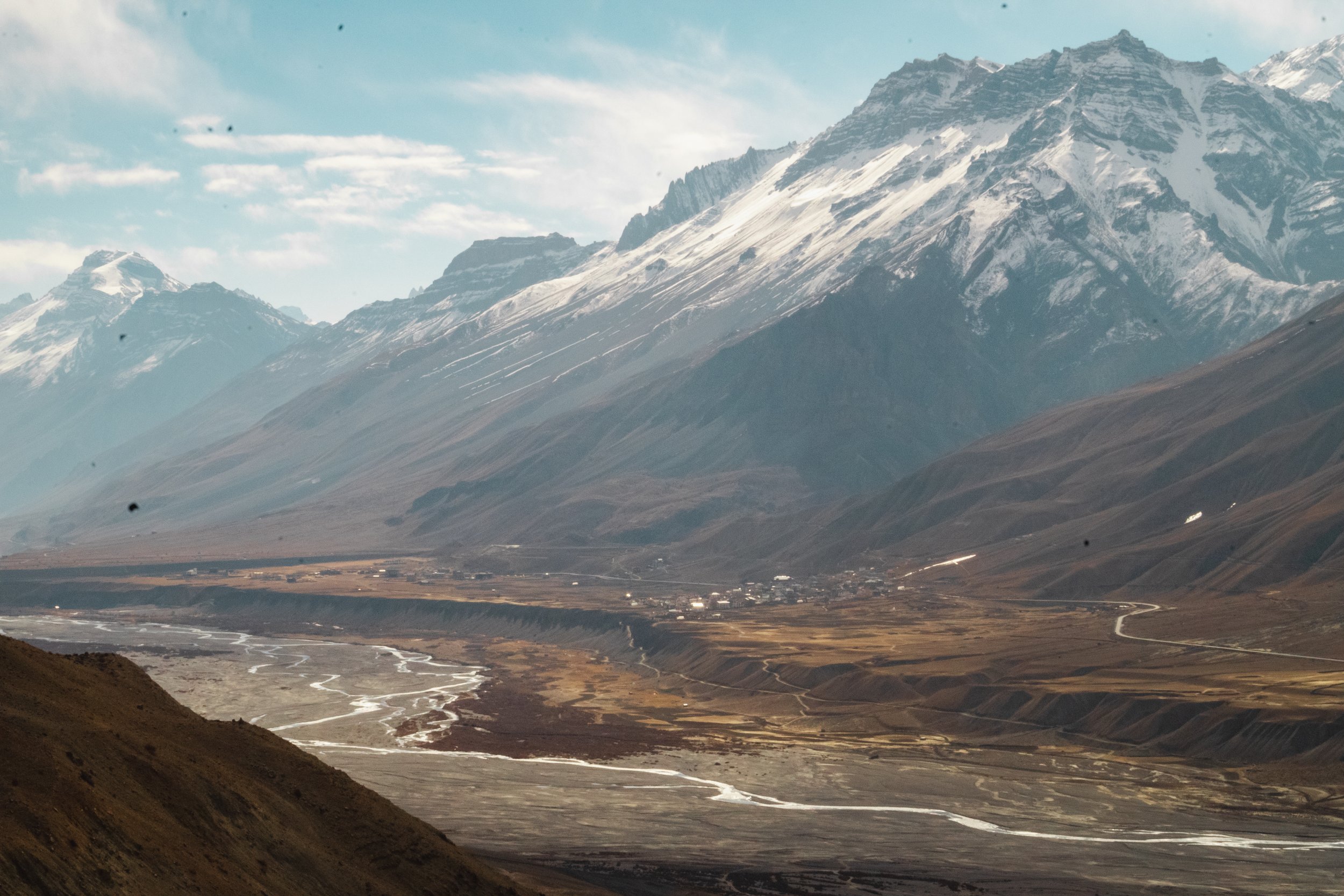
In the Pin Valley, the landscape is wide, dry, mineral. The wind is soft. In May, the valley changes, flowers appear, green returns, and Pin becomes what locals call the valley of five colors.
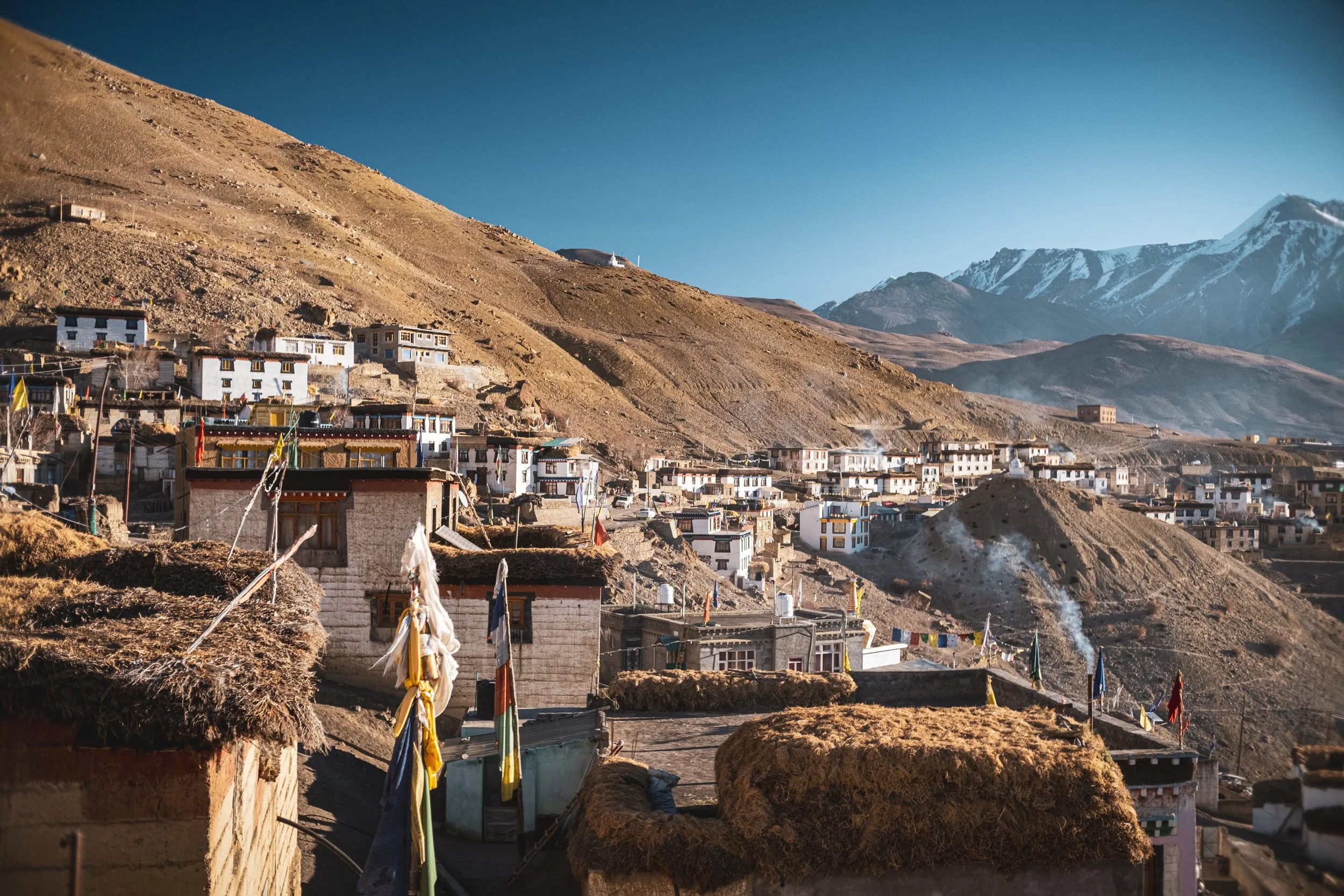
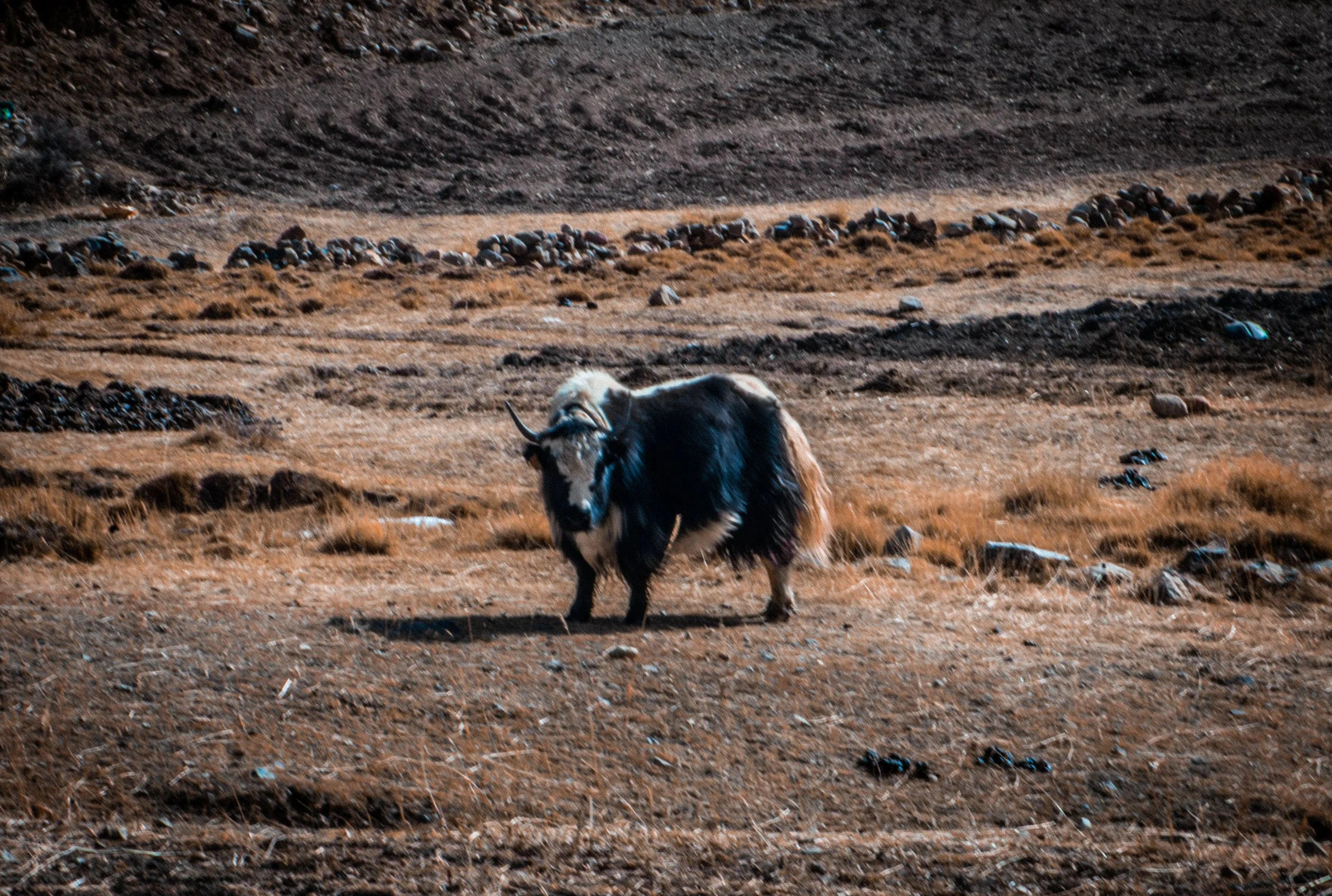
Around the village of Mudh, houses and barley fields rest at the foot of pale mountains. We get to know the families who host us and follow the rhythm of the village. There is time to write, explore nearby monasteries and head out into the valley, sometimes alongside yaks.
Slowing down there is the natural pace of life.
The silence, the simplicity, the openness of the landscape create space to breathe, to let things settle, to see anew.
DAY BY DAY
The itinerary
-
Transfer from Delhi to Kalka, then board the UNESCO-listed Toy Train towards Shimla. A slow entrance into the Himalayan foothills, with time to arrive, recover from the journey and meet the group.
Focus: peaceful arrival, first breaths of altitude.
-
We leave Shimla and begin the long climb through Narkanda and Rampur towards Kalpa. Tea stops, changing landscapes and the first great Himalayan peaks accompany the road. A gentle walk through the village on arrival.
Focus: entering the mountain rhythm, slowly.
-
Route via Nako and Tabo, home to the monastery where the Dalai Lama is said to wish to retire. Continue on to Dhankar and fall asleep to one of the most majestic views in the region. Overnight at the Dhankar Monastery guesthouse, the “monks’ hotel.”
Focus: settling in, first immersion in the valley.
-
A morning walk towards Dhankhar Lake before travelling into the quieter Pin Valley. We arrive at Hermitage, meet the family who will become our hosts, drink tea, settle in and begin to make the place our home.
Focus: rest, listening, writing, ceremony, human connection.
-
A full day dedicated to Tibetan Buddhism. After morning prayers and an introduction to monastic life, we spend time with an English-speaking monk exploring some of the ideas at the heart of Buddhist philosophy, impermanence, interdependence, compassion and the nature of mind, with space for questions and discussion.
Focus: understanding the world we are travelling through, rather than simply observing it.
-
An early departure for Key Monastery, with time to experience the monastery without rushing. From there, we continue higher towards Demul, where our host families welcome us with butter tea, food and a quiet evening together. We begin to experience a slower, community-based way of living. The group stays in pairs, each pair with a different host family.
Focus: from the monastery to the everyday life of a high Himalayan village.
-
In the morning, we make yak cheese with our host family. The rest of the day follows the life of the village, with time to walk, share tea, lend a hand and simply be there.
In the evening, we gather with our hosts and elders for Stories from Demul: an informal evening of tea, conversation, laughter and the memories they wish to share.
Focus: listening, stories, presence.
-
We head into the surrounding landscape with local hosts and their yaks. The yak-up journey is the main experience of the day; the rest is deliberately left slow, tea, walking, resting, talking or simply spending time in the village.
Focus: relationship with animals, landscape and the pace of village life.
-
The morning is spent with Norbu, the village’s doctor, with individual consultations followed by an introduction to Sowa Rigpa (Tibetan medicine) exploring health not only through the body, but through food, water, seasons, community, environment and place.
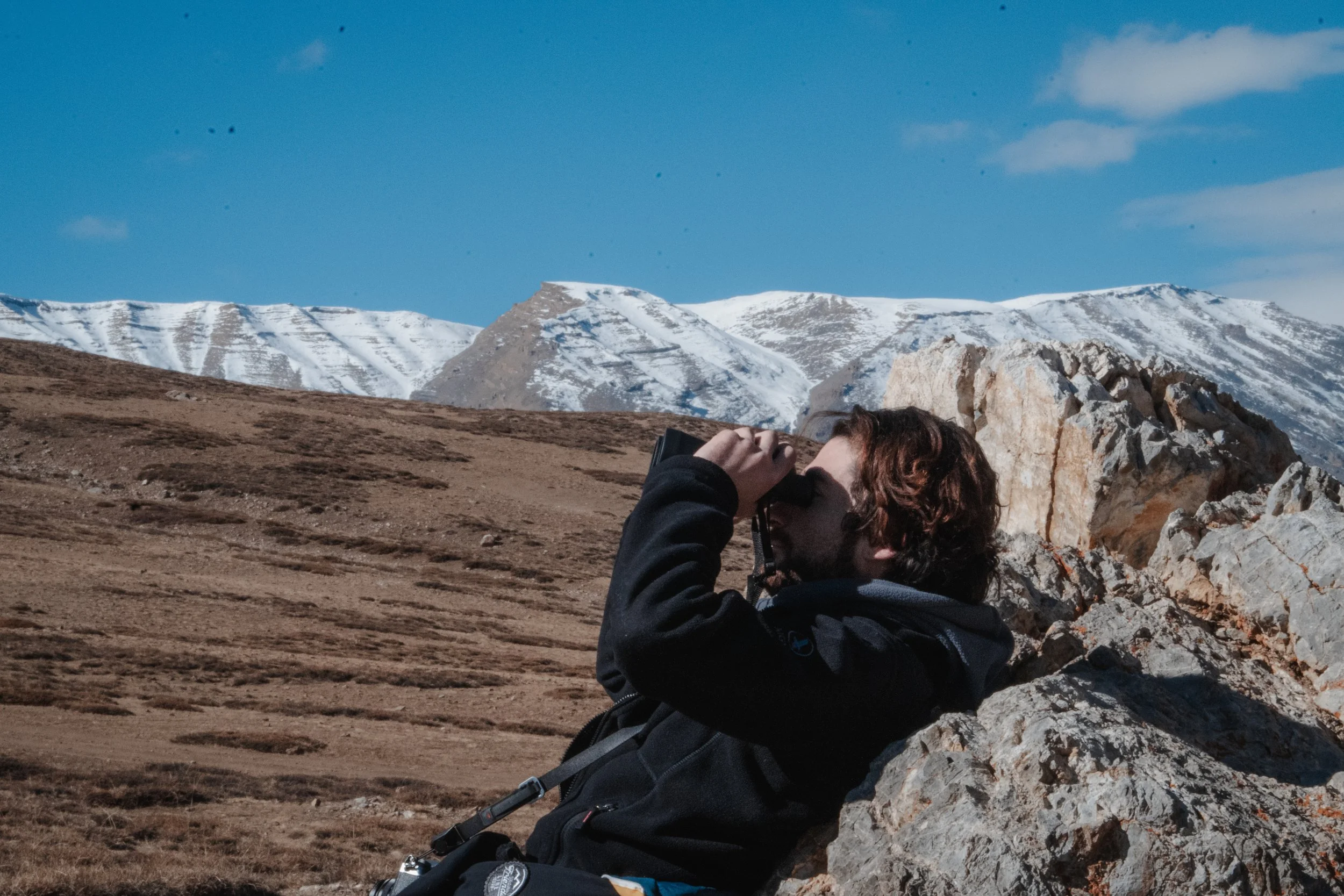
Later, if conditions and geography allow, we walk with a local naturalist to learn how to read the landscape: tracks, habitat, ibex, blue sheep and the ecology of the high valley.
Focus: seeing wellbeing as part of a wider living ecosystem.
-
Our last morning in Demul is spent with the families who have hosted us. Our hosts choose what would actually be useful that day: helping with animals, food, wool or seasonal work. A little time to give something back.
Before leaving, we take portraits with the families who would like them and a photograph of everyone together. If we can arrange printing, we leave copies with our hosts, along with small thank-you gifts.
We share a final lunch together, then say goodbye and return to Hermitage. The rest of the afternoon is deliberately quiet.
Focus: reciprocity, gratitude and the difficult art of saying goodbye.
-
Nothing is expected today.
Sleep. Read. Walk. Hike. Write. Drink tea. Spend time with the family. Talk for hours, or disappear somewhere alone. An optional activity of spending the entire morning from 7 am to 12pm isolated on our own is possible.
There is deliberately no programme to complete and nowhere we need to be.
Focus: allowing empty time to become part of the journey.
-
Morning centred around the Bhuchen tradition, followed by time to rest, reflect and begin gathering together what the journey has opened. The final evening is spent with our hosts around a farewell dinner and closing circle.
Focus: integration, gratitude and closure.
-
Our last morning with the family before beginning the long descent from Spiti. We leave the high valley behind gradually, stopping along the road and watching the landscape change around us.
If road conditions make it possible and it can be done without rushing, Chandratal may become part of the journey down.
Focus: leaving slowly, rather than suddenly returning.
-
Breakfast, then the final drive towards Chandigarh. We say goodbye to our local team and bring the organised part of the journey to an end.
From here, everyone continues onwards in their own way.
Focus: returning to ordinary life while carrying something of Spiti with us.
“In this place where time seems to have stood still, one has the impression that everything is moving. Including oneself.”
• Heinrich Harrer
The journey continues…
For those who wish, the journey can continue afterwards for as long as you like. Many travellers choose to extend the experience and keep exploring northern India, places like Dharamshala or Manali, while others may decide to head to Nepal. There, we’ve been invited by the NGO of Matthieu Ricard to visit their monasteries and share daily life with the monks, who have expressed genuine support for our project.
I will personally stay with the group to continue this journey together, not only as fellow travellers, but as companions and friends. Please note that this extended part of the trip takes place afterwards and is entirely at our own expense.
Silence is where
things begin.

THE WAY WE TRAVEL
The spirit & the framework
This trip is for those who want to :
Escape the hectic pace of everyday life.
Experience an unforgettable adventure in the heart of Himalaya.
Really slow down, far from noise, screens and obligations.
For people who are ready to spend time with themselves.
Share fourteen days with a small group (8 people max) in an atmosphere of trust and selflessness.
Discover Spiti and its culture with respect and attentiveness, without a checklist or spectacle.
No posture to adopt, no performance to prove: just the willingness to be there, together
What this means in practical terms :
Simple comfort: homestay accommodation: simple and welcoming spaces, sometimes with shared rooms (option for individual), basic toilets and restricted electricity. Hot water can be limited two of the nights.
Altitude & walking: slow walks, moderate trails at altitude; a minimum level of physical activity is recommended before departure. (physical preparation programme included :)
Presence with others: shared meals, circle time, respect for silence when suggested, kindness within the group.
Respect for the surroundings: modest dress, discreet behaviour in monasteries, no intrusive staging for social media.
Material simplicity: limited luggage, no excess, careful use of water and waste.
How do we support the journey?
Trip co-designed with Ecosphere Spiti, a local agency, and with communities in the region.
Experienced local team for logistics, road travel and high altitude.
Itinerary designed for gradual acclimatisation and the possibility of adjusting the pace.
Companions of the Wind support focused on listening, discussion and quality of presence, never on performance.
For what purpose?
(This list is not exhaustive; we welcome all your wishes)
Reconnect with your feelings, your emotions, your inner flame.
Clarify who you really are, deep down.
Enjoy a rare and memorable experience that will last a lifetime.
Heal your relationship with certain parts of your past.
Share powerful moments and forge authentic bonds.
Allow yourself to dream and pursue what truly inspires you.
Let yourself be guided towards the unknown with confidence.
Step outside your comfort zone.
Experience intense, full and vibrant joy.
Take a step back and gain perspective on your life.
Learn to let go and live fully in the present moment.
Make choices that are aligned with your future.
Take action and observe a change in your life.
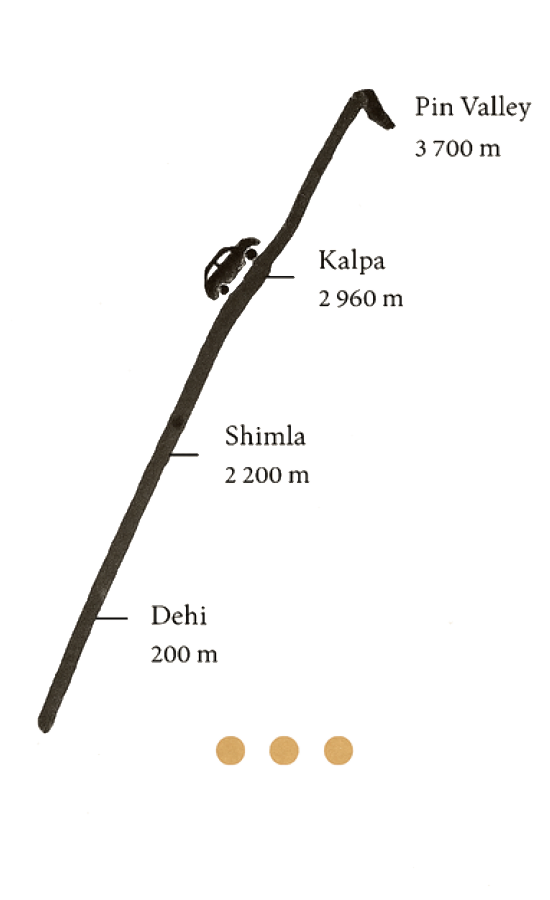
Altitude: a gradual ascent
Spiti is a high-altitude region, and our approach is gradual. We ascend in stages, through Delhi, Shimla and Kalpa before reaching the valley, allowing time for the body to adjust.
Ecosphere Spiti, who have accompanied travellers here for over twenty years, told us they have never had an altitude-related incident when following this progression. This is their experience of the route. Everyone responds differently, so we keep paying attention to how each person feels.
During my own time in the valley, I had no serious issues and took no medication for altitude. The first nights brought vivid dreams, and occasional light headaches appeared when we walked too fast. Slowing down helped. It taught me to listen rather than push through.
Our local team accompanies us throughout, and there is a medical centre in Kaza if medical attention is needed. We tell the guides about symptoms promptly and adjust our plans when necessary. If you have a health condition, previous altitude problems, or questions about medication such as Diamox, speak with a doctor before departure.
The call of the wild
This trip can be an opportunity to:
Share fourteen days with people you would never have met otherwise, and perhaps forge long and strong friendships; learn about a selfless way of life;
Discover a different relationship with time, work and performance by observing life in the villages of Spiti;
See the world you know from a different, broader and more nuanced perspective;
Experience a sense of lightness: walking, laughing and learning without having to ‘make the most’ of every moment.
It's not necessarily about ‘changing your life’ or having a great revelation. It's primarily about offering yourself a solid, beautiful and simple break, during which you can relax, rest... and perhaps open yourself up to another way of living your life.
We also come for the call of adventure. To feel the rucksack on our shoulders, the morning chill on our faces, the dust of the trail on our shoes. To walk until our thoughts fall silent, then lie down exhausted but happy under a sky we had only seen on maps. Leaving behind screens, appointments, obligations, and saying yes to a few days of real life outdoors, high in the mountains. Sometimes, leaving is just about accepting to let yourself be carried away for a few days, home is where the heart is at peace, rather than where it is safe.
ON THE GROUND
Practical details
Walking:
~2 hours of walking per day depending on the activities.
All walks are optional: you can stay around the house, you are free to do as you please.
For thinkers who like to walk.
There are opportunities for long hikes (ridgeways, side valleys, greater elevation) throughout the trip, the local guide can take those who want to go further.
I will stay with those who prefer a gentler pace or rest.
Terrain & altitude :
Altitude between 3,600 and 4,400 metres, with gradual acclimatisation.
Accessible if you are a regular walker and listen to your body.
Logistics :
Lightweight day pack: the rest of your belongings will remain in the village.
Emergency and medical equipment will be provided by the local team.
Spiti, a Tibetan sanctuary
Spiti is a high-altitude desert, all jagged peaks and vast, dust-colored horizons. I’ve spent time there drifting through villages where the concept of a "stranger" feels obsolete. People invite you in for tea without a second thought. You find yourself tucked away in a sun-drenched living room, sharing a bowl of snacks and a few words. Sometimes, you don't say much at all. It’s a strange, easy familiarity; it feels as though you’ve known these families for years rather than minutes.
A different kind of architecture :
One thing that stopped me in my tracks is the open-door policy. Many houses are simply left unlocked. When the Himalayan cold bites too hard, anyone can step inside, brew a pot of tea, warm their bones by the stove, or even cook a meal before moving on, even if the owners are miles away.
That level of radical trust changes you. It changes how you move through a place, and more surprisingly, it changes how you move inside yourself. You start to drop the armor you didn't even know you were wearing.
A kingdom preserved in amber :
This "familiarity" is rooted in a very deep, very old survival story. Between the 9th and 11th centuries, when Lhasa was torn apart by civil war and the collapse of the Tibetan Empire, nobility and monks fled west. They founded the West Tibetan Kingdoms (like Purang-Guge), turning these high valleys into a sanctuary for their culture.
Because of its sheer isolation, Spiti has remained almost entirely untouched since those exiles first arrived. Stepping into these villages feels less like travel and more like time-travel:
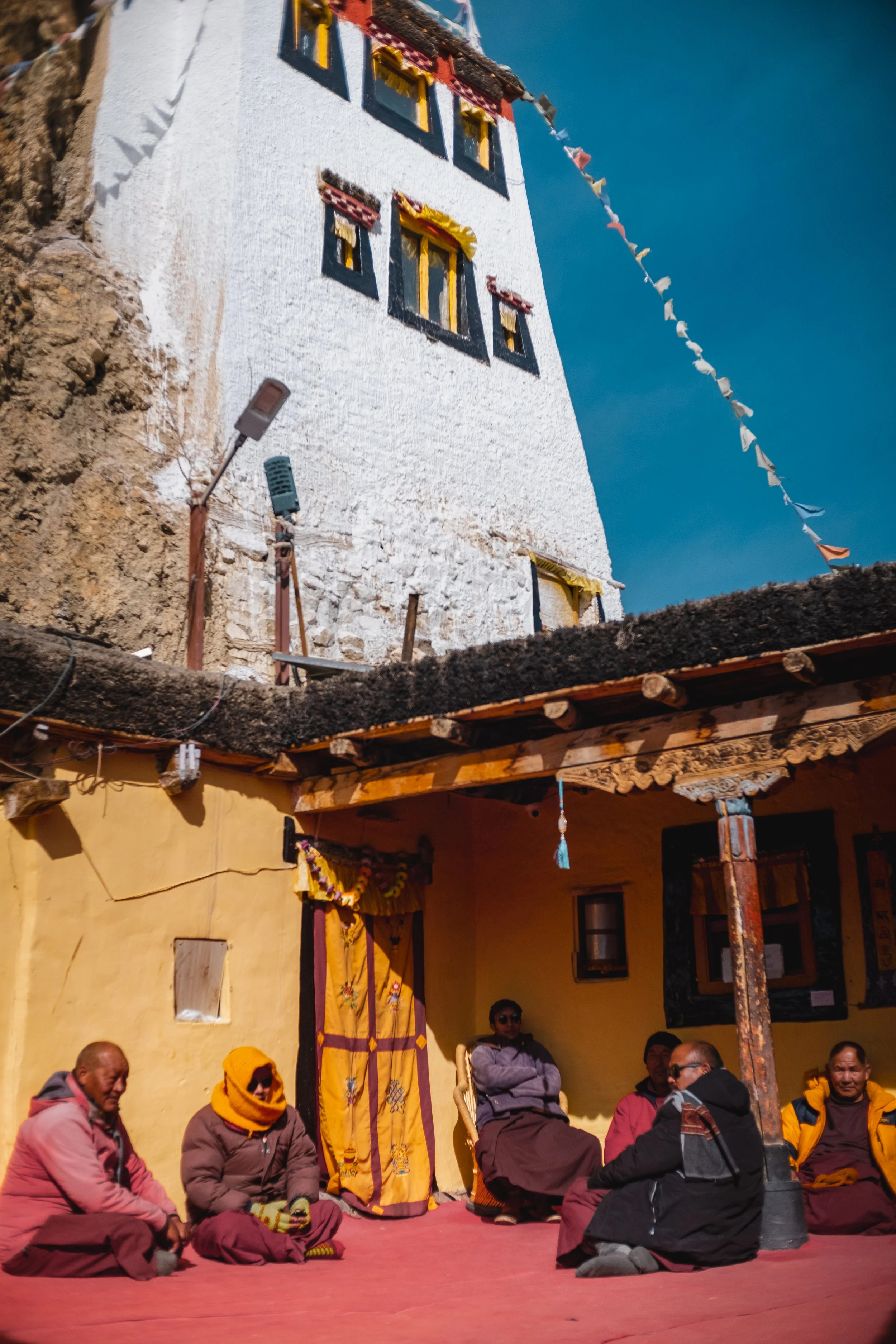
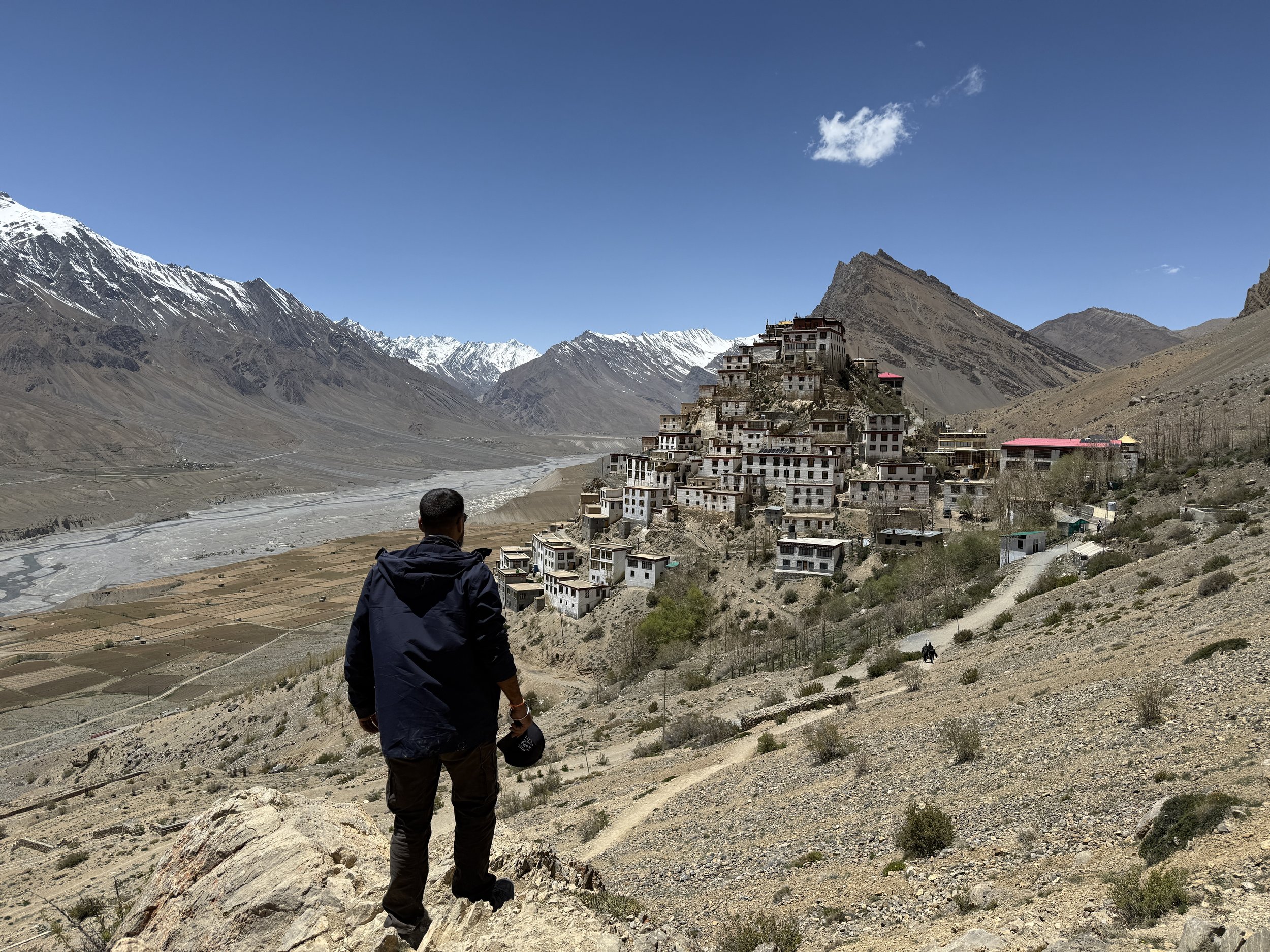
Key Monastery: Standing before it, you see a "monastery-fortress" that has survived Mongol invasions and earthquakes. It looks like a cluster of white houses piled precariously on a hill, a beehive of faith that has been buzzing since the 11th century.
Dhankar: Perched on a razor-sharp cliff, the old capital of Spiti looks like it’s growing out of the rock itself. Looking down from the crumbling walls. It was home to the exiled kings and the keepers of Tibetan life.
The valley of cousins :
Because of this shared bloodline, Tibetans exiled today do not see a foreign land; they call it "The Valley of Cousins."
This kinship is felt in the radical trust that defines the valley, the unlocked doors and the tea shared with every passing stranger. It is a culture kept in a high-altitude time capsule, remaining one of the few places where Tibetan life continues outside of Chinese rule. In Tabo, they say the Dalai Lama chose this village for his retirement because it is the only place that truly feels like home. Looking at the ancient murals, I finally understood why.
Wandering through these settlements, I felt my own rhythm begin to change. The time shared with families, the meals, the walks and the open landscape brought me back to simpler things. What mattered was being there, paying attention, and allowing the days to unfold. That feeling stayed with me after leaving the valley.

A break… to come back stronger.
This journey is a rehearsal for re-entering the world with a different heart.
We come for the pleasure of being somewhere fully. A walk through the village. Tea with the family. A meal that turns into a long conversation. The ordinary things, with time to notice them.
Some days, we will laugh for no particular reason. Other days, we may want to walk quietly, write, or sit with a question we have not yet found the words for. There is room for all of it.
With fewer things asking for our attention, we can begin to hear ourselves again. What gives us energy? What have we been missing? What would we like to make more space for?
Being together brings something else. We see ourselves through other eyes, share what we usually keep to ourselves, and discover people we would never have met in our usual lives.
What stays with us may be very simple: a friendship, a clearer question, the memory of feeling at ease. A small shift in how we pay attention, and in how we choose to live once we return.
A little distance can help us see our lives more clearly. Walking, sharing, writing and resting bring that reflection back to something we can actually feel. We return with our own questions, and with time to decide what we want to do with them.
This journey grows from a wider wish to make room for human connection and a slower way of living. You can read more about that in the story behind Companions.
Gallery
-
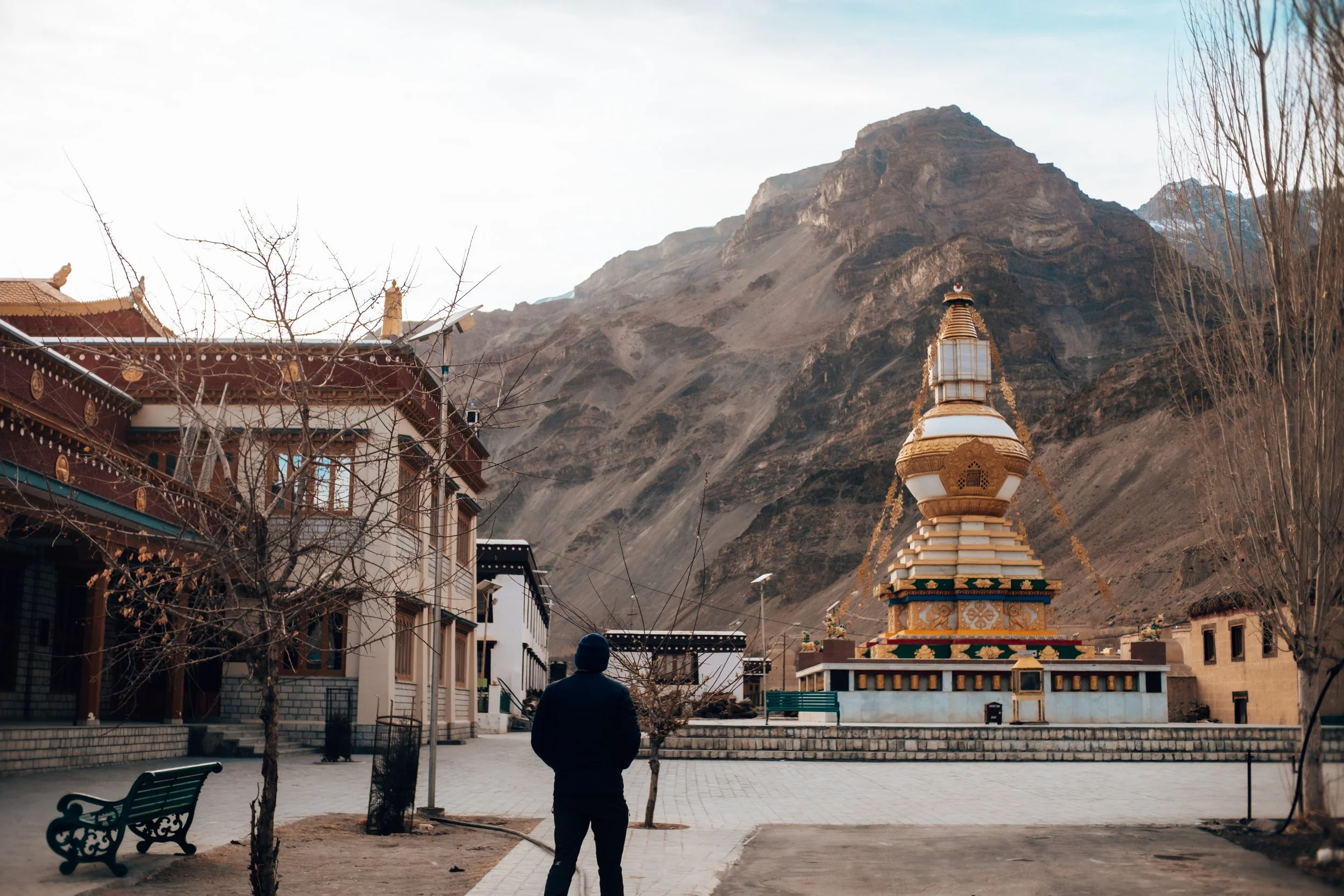
![A traveller in the courtyard of Tabo Monastery, beside a stupa and the mountains of Spiti.]()
Tabo Monastery, founded over a thousand years ago.
-
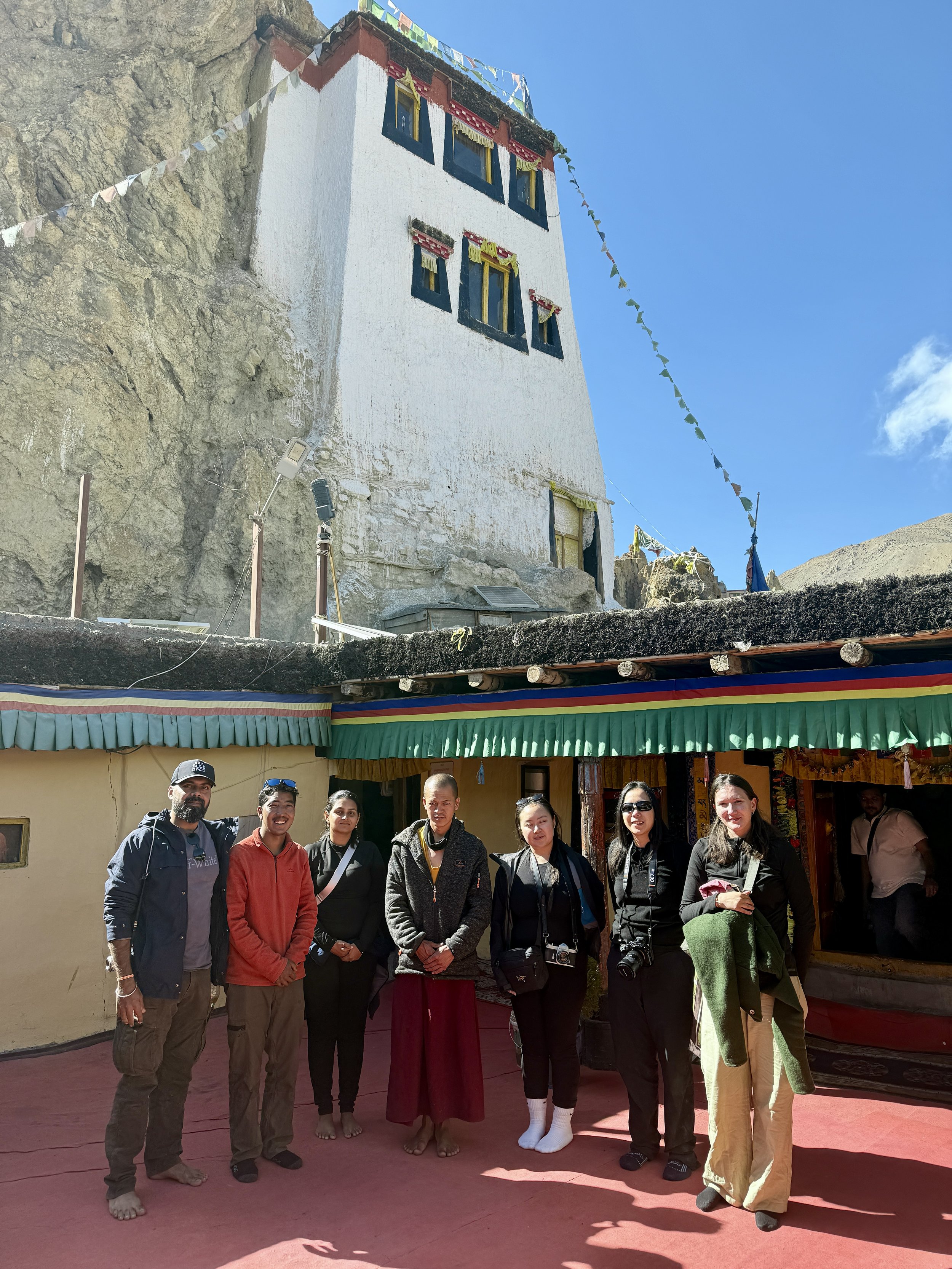
![Travellers sharing a moment together in Spiti Valley.]()
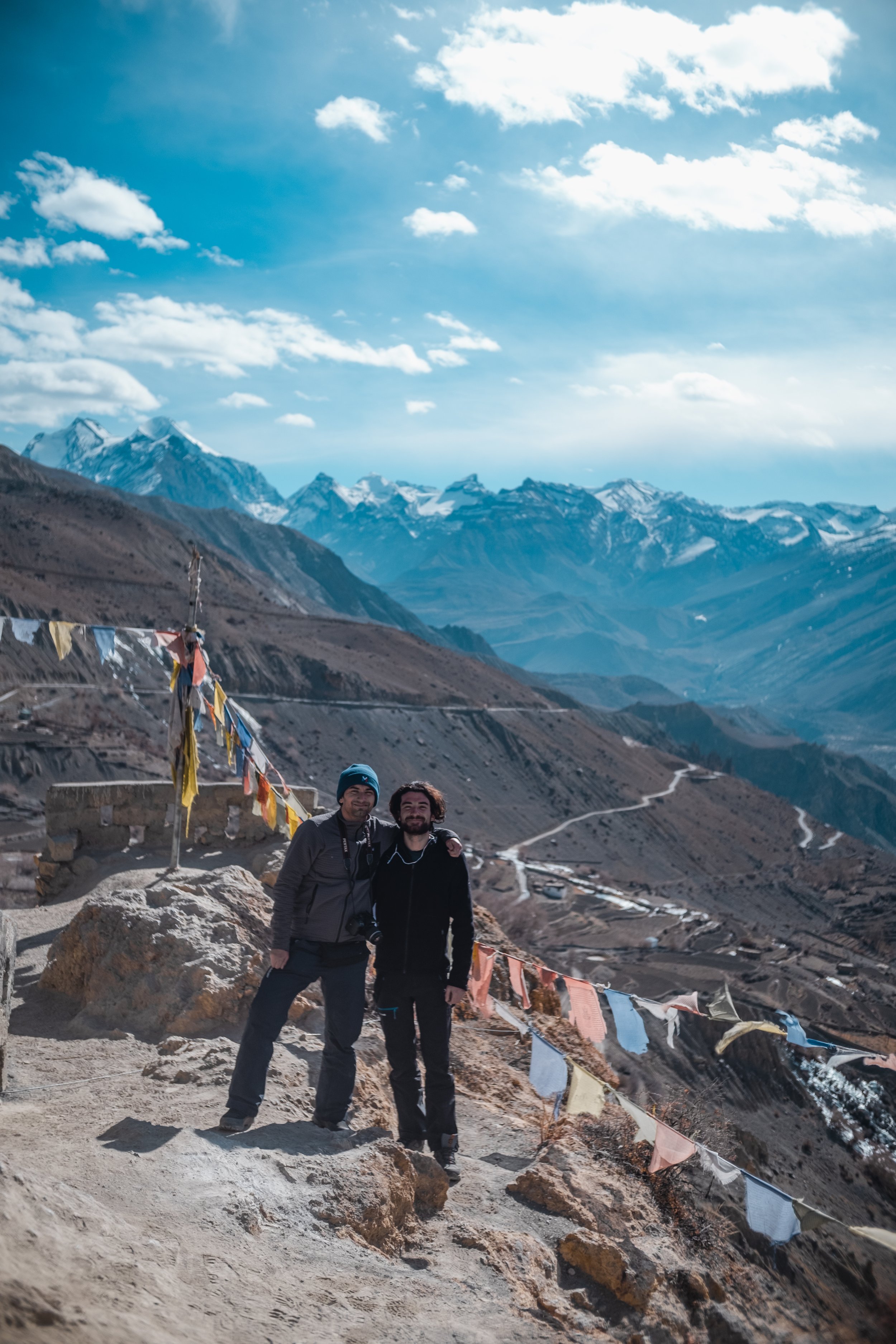
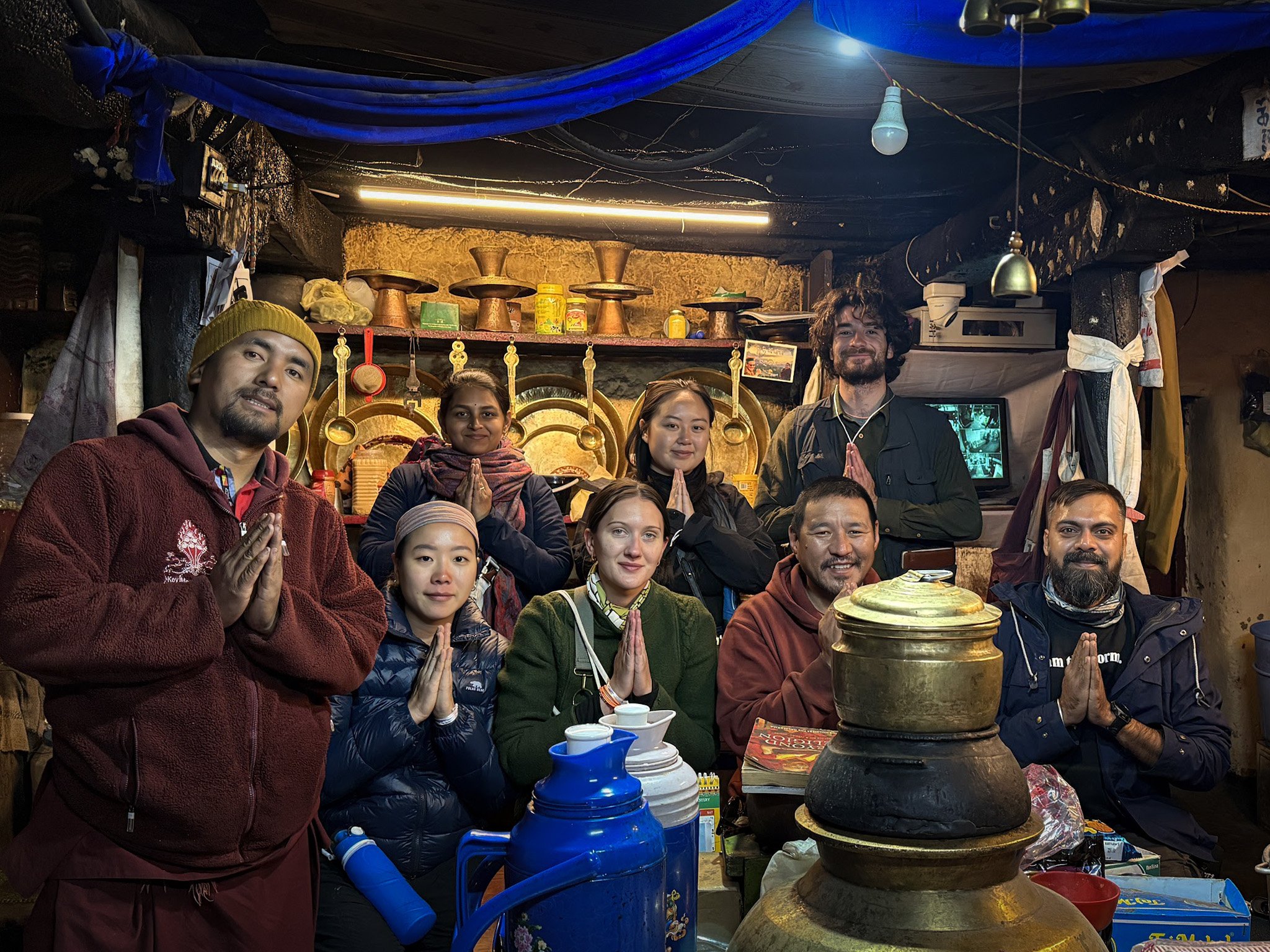
Together in Spiti.
-
![Monks at Key Monastery in Spiti Valley.]()
Monks at Key Monastery.
-
![Dhankhar Monastery above the Spiti Valley, overlooking the river and surrounding mountains.]()
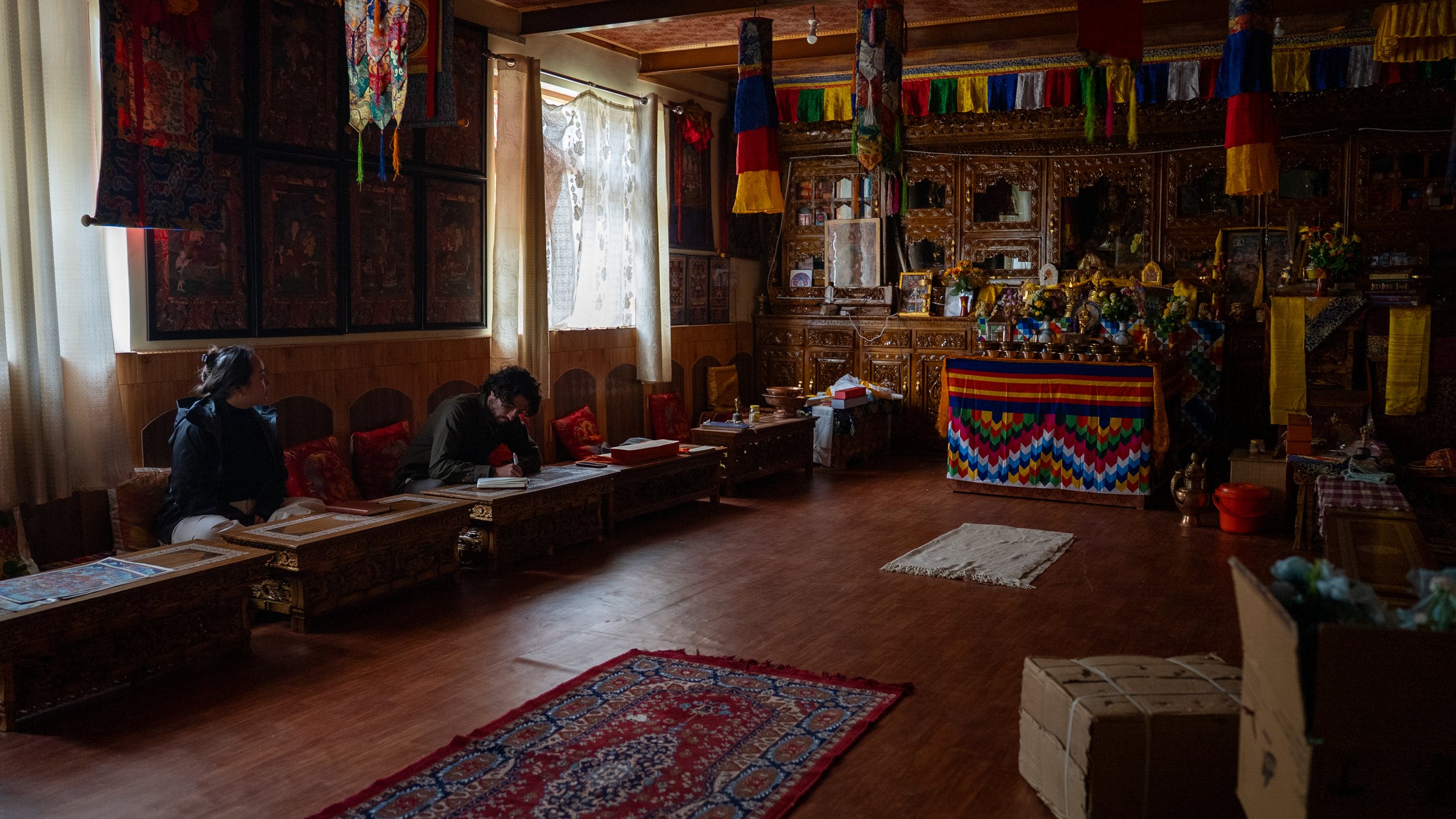
The monastery at Hermitage House.
-
![Hermitage, our accommodation in Pin Valley, surrounded by Himalayan mountains.]()
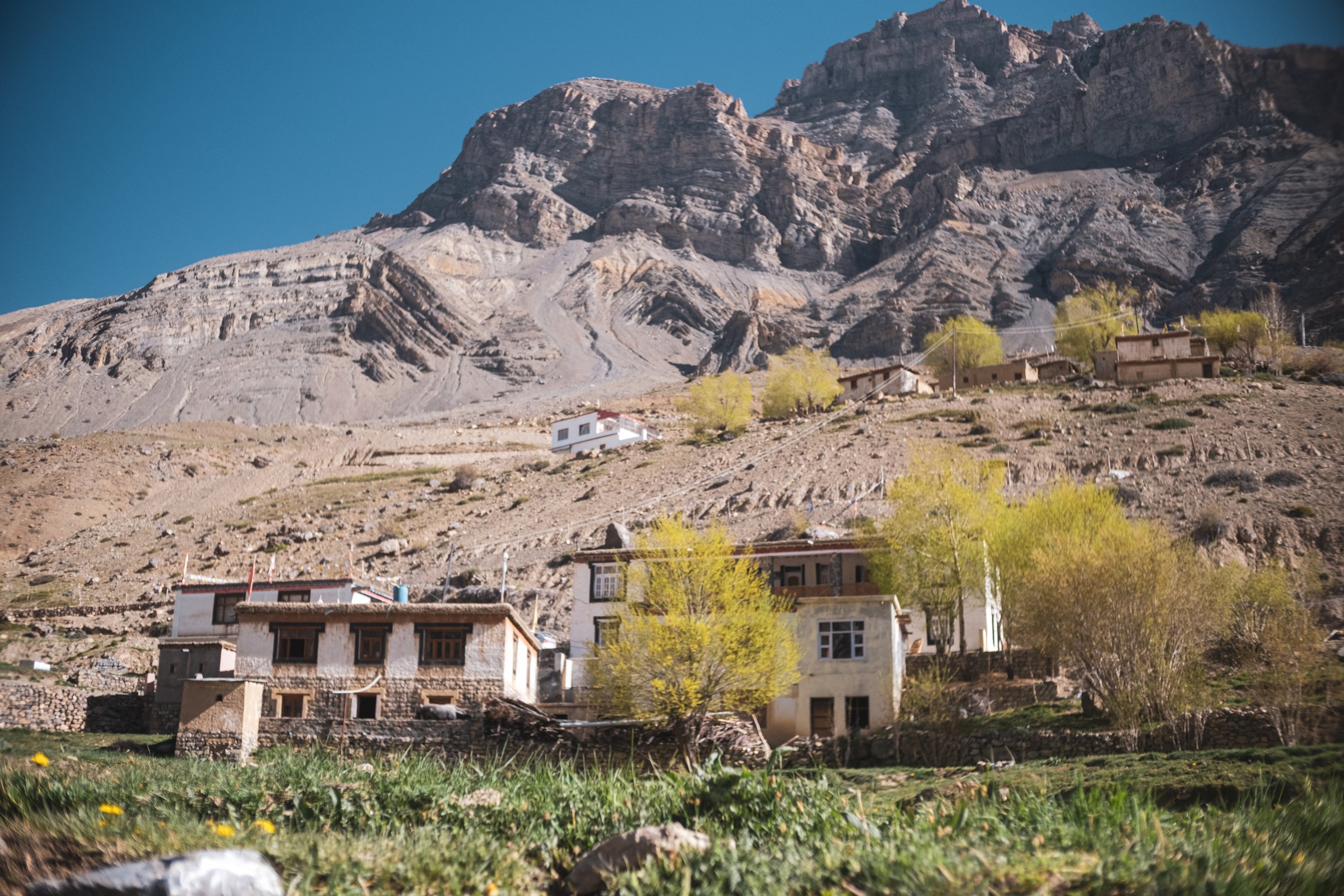
Hermitage, our home in Pin Valley.
-
![Sharing a meal together in Pin Valley.]()
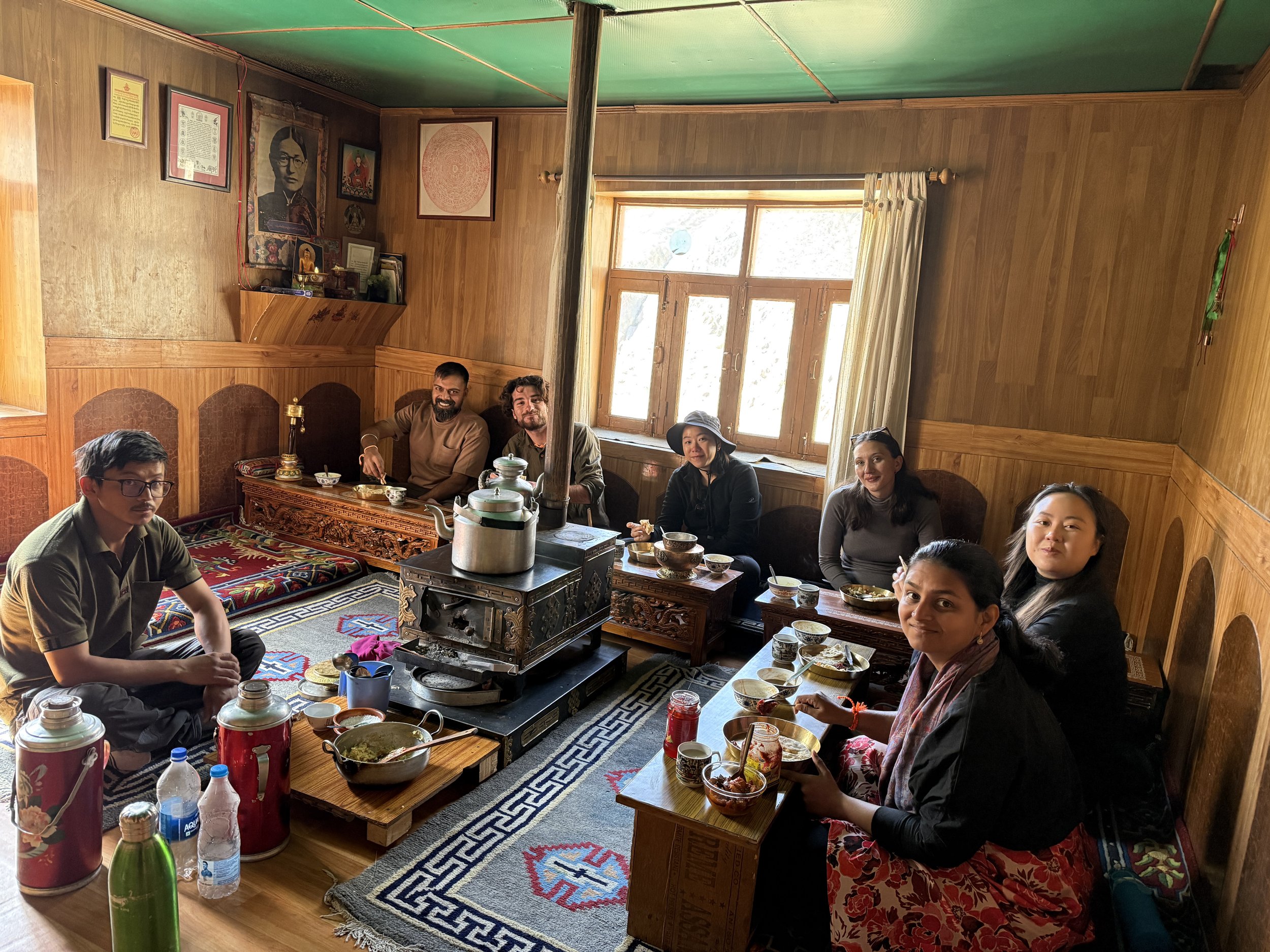
Dinner time!
-
![Key Monastery overlooking Spiti Valley.]()
Key Monastery, above the valley.
-
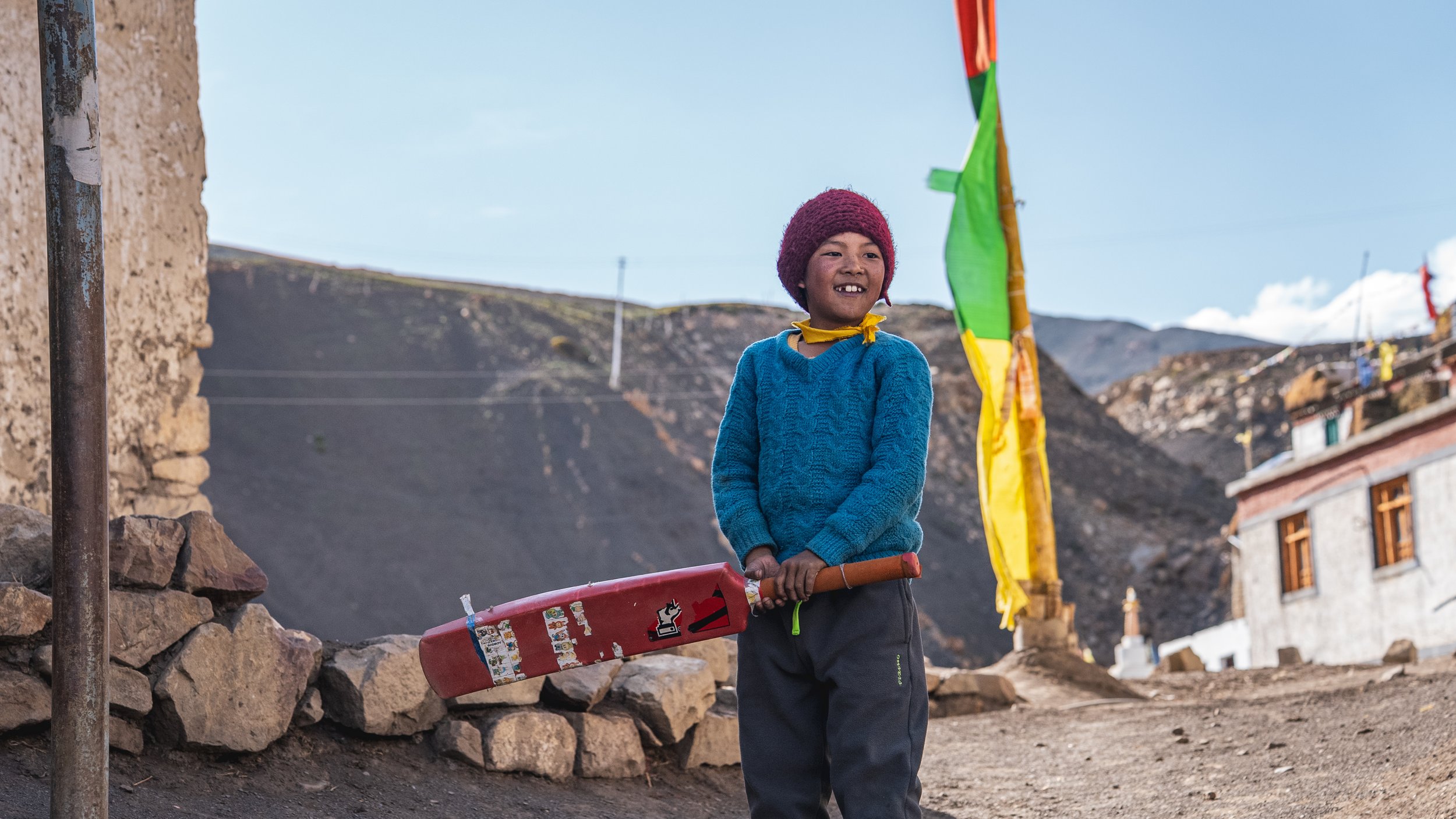
![A child holding a red drum in a mountain village.]()
Little man playing Cricket in Demul.
-
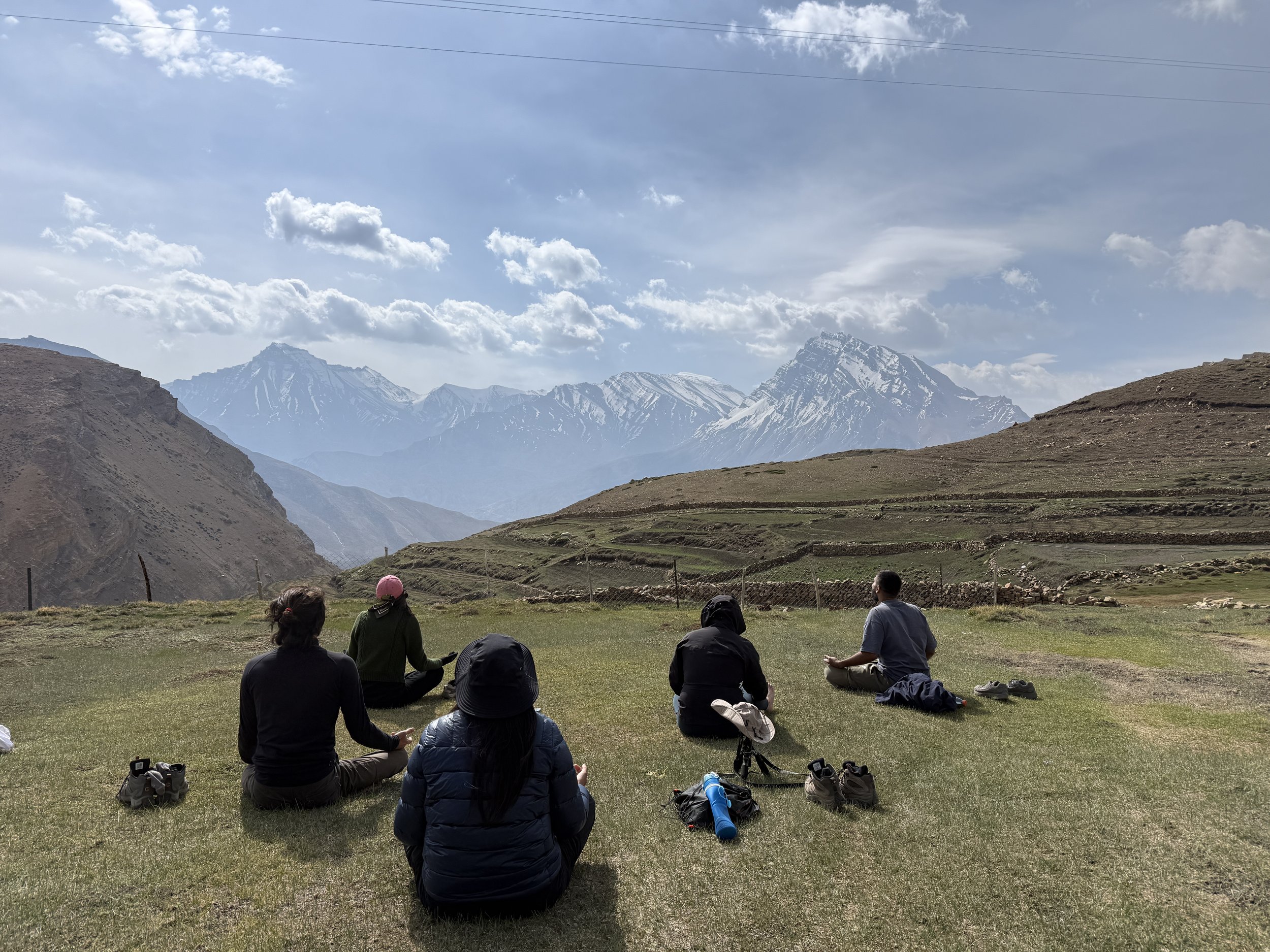
![Travellers sitting on a grassy slope above terraced fields and Himalayan peaks.]()
Group meditation early morning.
BEFORE, DURING & AFTER
Accompaniment
Three stages of support :
This journey does not begin in the Himalayas. It begins long before departure, gently, at home, so that you arrive there with your body and mind already open.
Inner preparation :
A month and a half before the trip, we invite each participant to obtain a travel journal, a private space for reflection and self-reflection.
We will invite you, with simple questions, to set your intentions:
Where am I today?
What would I like to understand, heal, rediscover?
What am I looking for within myself, in silence and walking?
This is not a spiritual or therapeutic exercise, but a moment of clarity before departure. This notebook accompanies the traveller throughout the expedition, to record feelings, thoughts, images, dreams...
Physical preparation :
A light and motivating programme, designed by a coach specializing in gentle preparation, is offered a month and a half before departure.
A few simple exercises to do at home or outdoors, without equipment: mobility, breathing, endurance. The aim is to start re-acclimatising your body, getting used to small efforts, altitude and regularity.
Our coach will offer personalised support on request in order to adapt to your needs and answer your questions throughout your pre-trip preparation.
Evening circles :
Six ceremonies will take place throughout the journey, in small circles, over a cup of hot tea or in the vastness of the mountains. Each explores an essential theme: fear, connection, gratitude, direction, return...
They combine speaking, observation and listening. There is no obligation to participate, participation is open and respectful.
Discussions may continue afterwards, in individual or informal conversation. The method is based on approaches drawn from philosophy, coaching and humanistic psychology: a space to listen to what is stirring within oneself and share it all together.
“True travel does not consist in seeking new landscapes, but in having new eyes.”
• Marcel Proust
WHAT WE BRING HOME
Return & after
The return…
The journey does not end when we leave the valley. In the weeks that follow, a conversation, a landscape, a quiet morning may return to us in the middle of an ordinary day.
What do we do with that space once we are home? How do we bring a little of that attention into our work, our relationships, and the way we live together?
The final days in Pin Valley and our stay in Raison give us time to let things settle before the rush of Delhi and the world beyond. We return with our own questions, and with the possibility of making room for something different in everyday life.
Our story
The wind is our invitation to travel with attention, a little more freedom and less certainty. If you would like to know why this project exists, and why we chose this name, read our story.
Staying companions
Before parting, we come together one last time. A simple closing circle, to share, or not, what has been lived, what we carry with us, and what we choose to leave behind.
After the journey, participants are invited into a shared space, a place to keep writing, exchanging, and staying in touch. From time to time, we also organise small reunions: simple retreats, often by renting a house for a few days, to spend a few unhurried days in each other’s company.
What remains
What we take with us is rarely tangible:
A slower pace, fewer screens, deeper attention.
Faces, landscapes, and conversations that stay alive.
Better questions.
And the feeling that it is possible to live with less, and yet more freely.
Some moments are intentionally kept undisclosed, meant to be lived as a surprise rather than anticipated.
Our values
A safe space for women.
This trip is intended to be a safe and welcoming space for all women who wish to let go and relax in trust. Even though our trips are mixed-gender, respect is non-negotiable: no discomfort, no ambiguity, no inappropriate looks.
Our community brings together thoughtful, sensitive and caring souls.
Ethics.
We support the communities of the Spiti Valley and ensure fair working conditions for all those who make this trip possible: host families, cooks, drivers, guides and field teams.
In collaboration with Ecosphere Spiti, a leading local organisation, we guarantee:
Fair and transparent remuneration.
Sustainable partnerships that respect the local area.
A concrete contribution to local initiatives (solar energy, education, cultural and environmental preservation).
We have chosen simplicity: small groups, limited travel, and fewer than 32 travellers per year across all our trips, in order to preserve the quality of the encounters and the balance of the place. Travelling here means meeting and supporting, without leaving an unnecessary footprint.

Ecosphere Spiti is one of the most respected organisations in the Himalayas. For over twenty years, they have supported local communities, protected the environment, and trained guides with exceptional altitude and safety skills. They know the valley intimately and work with compassion, competence, and deep respect for their land and the Tibetans.
Traveling with them means experiencing the Spiti in the most authentic and ethical way possible.
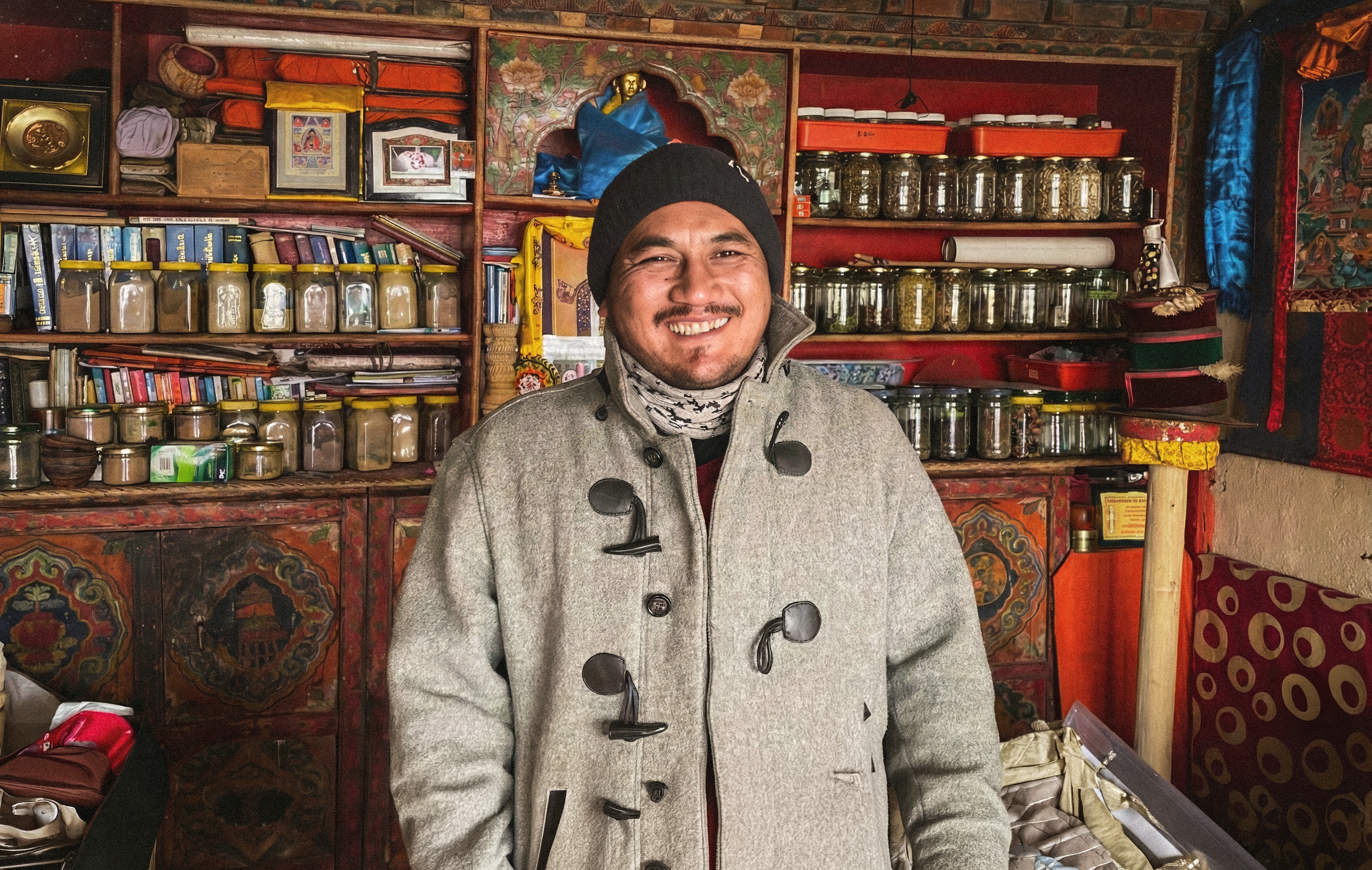
Our guides :
Norbu
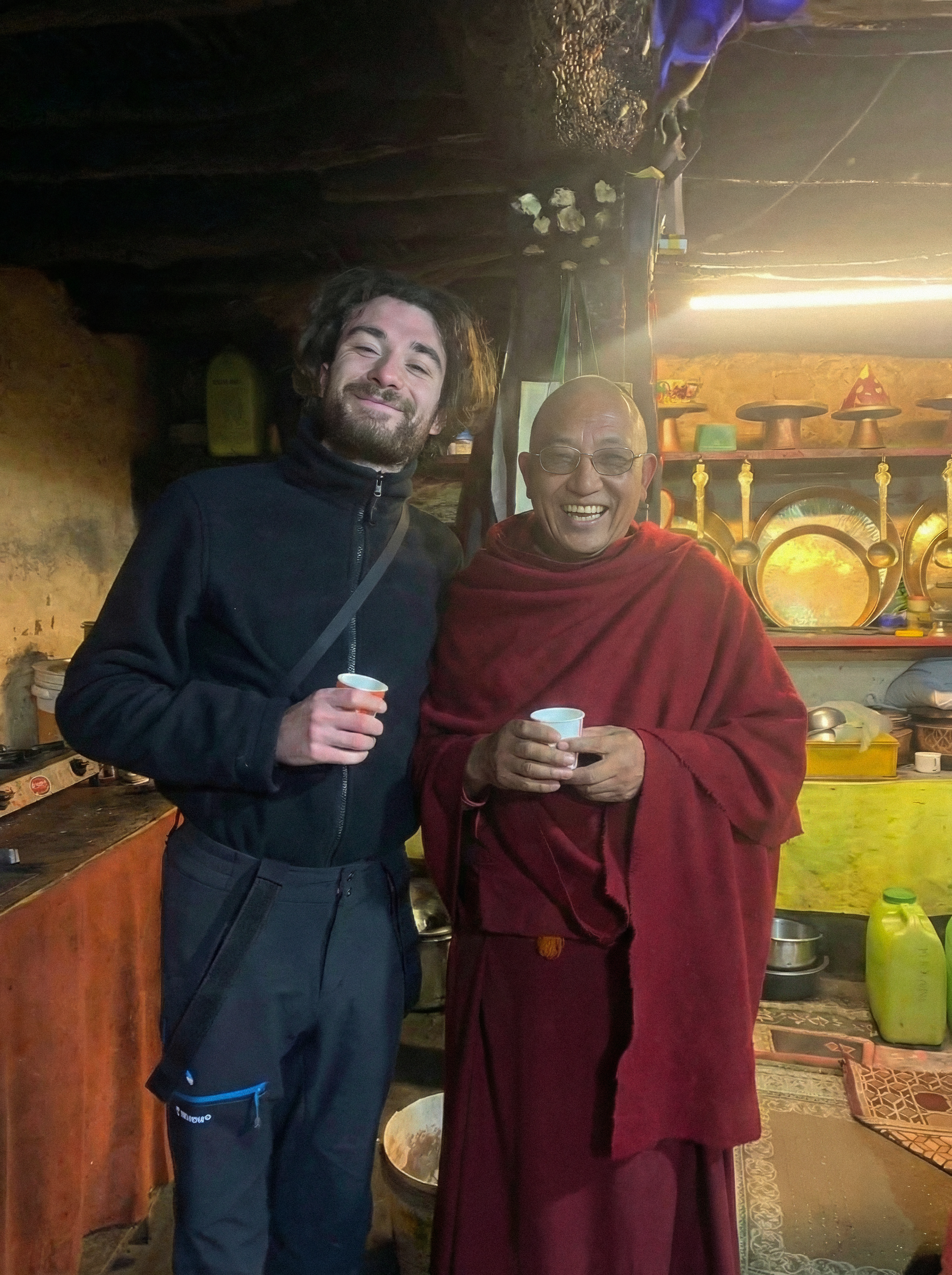
In the village of Demul, we met Norbu, a man whose presence is as steady as the mountains. He is an Amchi, a practitioner of an ancestral lineage of healing passed down through countless generations.
When my brother and I spoke to him of our ailments, he opened a manuscript from the 9th century. Watching him trace the ancient Tibetan script to find a remedy felt like watching time collapse. Norbu is a bridge between eras, a healer who understands that medicine is as much about the patient’s spirit and meditation as it is about the herbs he gathers.
He is a rare, warm soul who moves with immense kindness and empathy. But perhaps his most profound medicine is his joy, he seems to live in a state of perpetual light, smiling constantly and laughing with an ease that makes the thin air feel effortless to breathe.
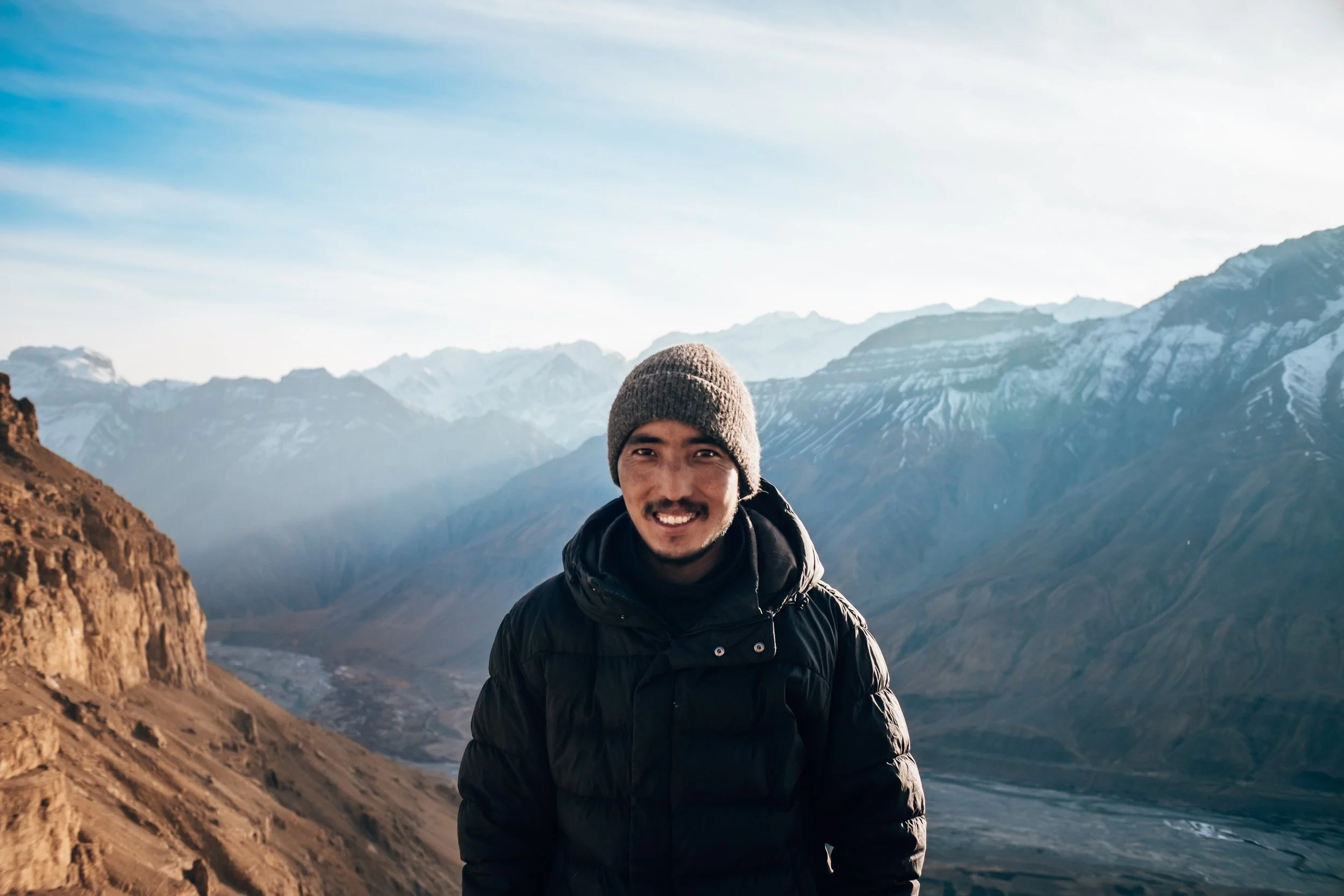
Sonam
In Demul, a village that feels like the very edge of the world, I met Sonam. He is a man made of the mountains, a wildlife guide who knows every fold and secret of this valley. He speaks of the peaks as old friends, holding their names and heights in his mind like a sacred map.
But for all his mastery of the high ridges, it’s his gentleness that stays with you. He is a man of deep, mindful attention; he listens always with all of his presence.
I’ll never forget sitting in his home. Knowing him means knowing his family. We sat with them, the room falling into the rhythmic, meditative click of needles as they knitted wool socks. Seeing him there, cradling his one-year-old baby against the backdrop of Spiti, the wild, intimidating mountains felt, for a moment, wonderfully like home.
SMALL GROUP, SHARED JOURNEY
Your Contribution
What this contribution sustains
A 14-day journey, including accommodation, local transport, guides, meals and accompaniment throughout.
The work of local families, guides and hosts in Spiti.
A slow pace: small group, time, flexibility.
Preparation before departure and accompaniment after our return.
What is not included
Flights to and from India, allowing each participant to arrive in their own way, at their own rhythm.
Accommodation and expenses in Delhi before the journey begins and after it ends.
Personal purchases, gifts from local artists and souvenirs.
About fairness
We know that financial situations differ. If this journey speaks to you but feels out of reach, you are welcome to write to us. We will always try to have a just and human conversation to figure things out.
Payment in instalments is possible.
Where does the money go?
Approximately €850–900 for Ecosphere Spiti: homestays, meals, local transport, guides, permits and activities in the valley.
Approximately €450 for travel logistics in India: trains, transfers, meals and accommodation before and after our time in Spiti.
The remaining €600–650 sustains Companions of the Wind: designing and preparing the journey, supporting the group before and after, accompaniment throughout, communication, administration, unforeseen costs and the margin that keeps the project going.
Your contribution supports the people who make this journey possible, and the work of keeping Companions alive, before, during and after these fourteen days. Part of the proceeds is redirected towards humanitarian aid in the valley.
Registrations
Let’s talk first.
Each registration begins with a phone call (20 to 30 minutes) to get to know you, understand your expectations and answer your questions.
Payment is made in two installments:
30% upon booking.
The balance two (2) months before departure.
Once your place is confirmed, you will join the support group and receive a list of recommended equipment and insurance. Take the time to see if it's the right moment for you, we'll be happy to discuss it together! To register, simply write to us at mattheo@companionsofthewind.com.
FAQ
Is it for me if I come alone?
Yes, absolutely. We even strongly encourage travellers to go alone. Travelling solo allows you to step outside your comfort zone, without staying solely with people you know and could cling to for reassurance.
The goal is also to open yourself up, and there's nothing better than starting from scratch to do that! We also appreciate committed friends. Sometimes, changing together can be beautiful!
Do you have to be athletic?
Not necessarily. The journey is both a psychological and physical reconstruction. The activities are designed as an exercise to re-inhabit your body, as it is, with its strengths and limitations. A month of gentle preparation is recommended for the altitude, with dedicated support, to relearn how to live in harmony with your body.
How do you cope with altitude?
We ascend in stages, with time to acclimatise along the way. Ecosphere, who have accompanied travellers here for over twenty years, told us they have never had an altitude-related incident when following this progression. Their local team knows the valley and accompanies us throughout. There is also a medical centre in Kaza if medical attention is needed.
Everyone responds differently to altitude. We take it slowly and tell the local team if we feel unwell. If you have concerns about altitude or medication such as Diamox, speak with a doctor before departure.
Is there a network/electricity supply?
There will be electricity but network will remain very variable depending on the places visited during the day. At the homestay, there will be little to no network at all. We prioritise presence over screens, and that's a good thing! You will have plenty of opportunities to recharge and use your devices to take photos and capture this unforgettable moment. We will also be equipped with solar chargers.
Can I have a vegetarian option?
Yes, the cuisine is local. Vegetarian options are available and often preferred. Although meat is sometimes eaten, Spiti cuisine is mainly based on cereals (barley, buckwheat), yak or goat dairy products, and seasonal vegetables. They also eat a lot of Indian food!
What time should we arrive?
Plan to arrive in Delhi the day before your departure: 14 May for the May journey, or 4 June for the June journey. We start early the following morning. We’ll confirm the meeting point and train details with the group before departure.
I will also be there, and we can coordinate and prepare together on the preceding day.
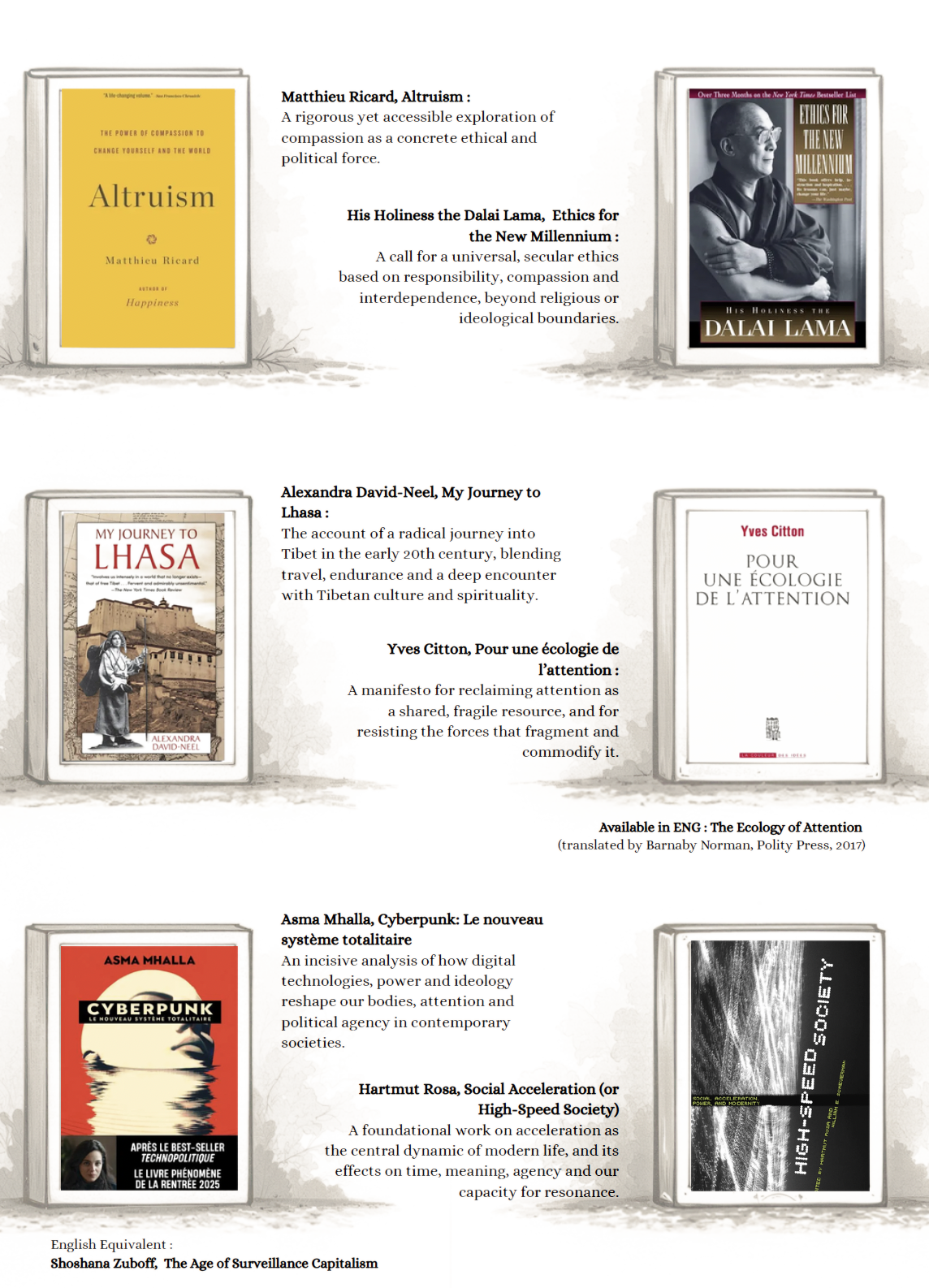
Compagnons’ read :
On this pageClose menu ↑
Thank you for taking the time to walk with us for a while.


Before we go, let’s meet.
We keep our groups small because the people who join us matter as much as the places we visit.
If this journey speaks to you, tell us a little about yourself. We'll arrange a relaxed call to get to know each other, answer your questions, and see whether the journey feels right for you.
Don’t be stranger ! :)